By Steve El Sabai
NAIROBI, Kenya, November 6, 2026 — Kajiado Governor Joseph Ole Lenku has unveiled a new political outfit, the Forum for Economic Development Agenda (FEDA), signalling a consequential shift in his political trajectory and opening a new chapter in the organisation of Maa community politics ahead of the 2027 General Election.
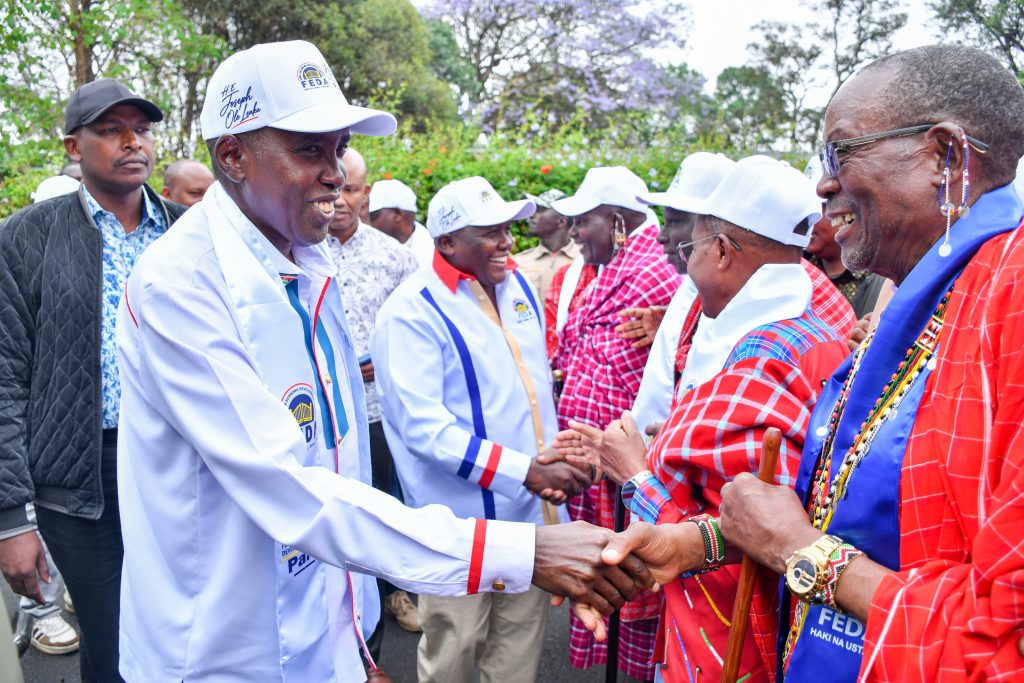
The party was officially launched on Friday at Ufangamano House in Nairobi, in an event that marks Lenku’s determination to establish an independent political vehicle through which Maa leaders can consolidate their political interests, articulate their development priorities and negotiate a more influential position in the country’s national political architecture.
The formation of FEDA comes against the backdrop of mounting disagreements between Lenku and the Orange Democratic Movement (ODM), the political outfit under which he secured his gubernatorial mandate. The development marks a departure from his longstanding association with the party following prolonged differences over its political strategy, leadership decisions and electoral arrangements in Kajiado County.
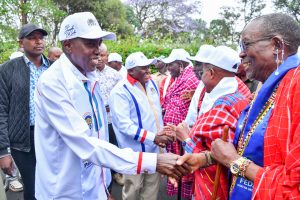
The launch attracted supporters and political enthusiasts dressed in white, blue and gold, colours prominently displayed during the event and expected to constitute an important element of the new party’s visual identity.
FEDA is envisaged as a regional political platform that will bring together leaders, elected representatives and prospective candidates from Maa-dominated counties, offering them an institutional framework to coordinate their political activities and pursue collective interests.
The establishment of the party follows months of escalating political friction between Lenku and the ODM leadership, with the governor increasingly questioning the party’s commitment to the political interests of its supporters in Kajiado.
In August 2026, Lenku accused ODM of betraying its supporters after some party officials reportedly campaigned for politicians affiliated with the United Democratic Alliance (UDA), notwithstanding the fact that his deputy, Martin Moshisho, was seeking the Kajiado gubernatorial seat on an ODM ticket.
The disagreement exposed deepening fissures within the party’s political establishment in the county, particularly over succession politics and the positioning of local leaders ahead of the 2027 elections.
The controversy subsequently attracted a public response from ODM Acting Secretary General Catherine Omanyo, who challenged Lenku to relinquish his association with the party if he was dissatisfied with its leadership and political direction.
Lenku’s unveiling of FEDA now provides an institutional expression of the alternative political arrangement he had previously advocated, moving the debate over Maa political autonomy from internal party disagreements towards the establishment of a separate political organisation.
In the days preceding the launch, the governor disclosed that he had undertaken consultations with Members of the County Assembly (MCAs), political aspirants and other leaders from Kajiado, culminating in an agreement to establish a political vehicle capable of fielding candidates for elective positions across Maa-dominated counties, with the exception of the presidency.
The initiative is intended to provide the community with a coordinated political platform through which leaders can pursue representation, negotiate political partnerships and advance development priorities at both county and national levels.
Articulating the rationale behind the initiative, Lenku maintained that the Maa community had reached a point where it needed to independently organise its political affairs and secure a more consequential position in national decision-making.
“Time has come for the Maa Nation to stand on their own and claim space at the national table, just like any other region in Kenya,” the governor stated.
His remarks underscore the central argument behind FEDA’s formation: the need for a structured political organisation through which the Maa community can articulate its interests, strengthen its bargaining capacity and participate more strategically in national political negotiations.
The initiative could have implications beyond Kajiado, particularly in Narok and other counties where Maa leaders are seeking stronger coordination in electoral politics and regional development.
The unveiling of FEDA also coincides with a defining phase in Lenku’s political career as he approaches the conclusion of his second and final constitutional term as Kajiado governor. Having served two terms at the county’s helm, Lenku has previously expressed interest in transitioning to the Senate, where he could seek the Kajiado senatorial seat in the 2027 General Election.
The establishment of FEDA could consequently provide an organisational foundation for his post-gubernatorial political engagement while creating a common platform for other leaders seeking elective positions across Maa-dominated counties.
For ODM, Lenku’s political realignment introduces a new dimension to its political organisation in Kajiado, where the governor has been a prominent figure within its electoral establishment. His decision to champion a separate political outfit could also compel the party to reassess its regional political arrangements and relationships with influential Maa leaders.
The extent to which FEDA attracts sitting MCAs, political aspirants, grassroots mobilisers and influential community leaders will be critical in determining its organisational footprint and political reach ahead of the next General Election.
Beyond electoral considerations, the new party will also face the task of translating its economic development agenda into concrete policy proposals addressing infrastructure, education, healthcare, employment opportunities and the broader socioeconomic priorities of the Maa community.
With the 2027 General Election approaching, FEDA’s launch represents a significant development in Maa political organisation and signals Lenku’s intention to chart a different political course beyond his association with ODM. Attention will now turn to the party’s institutional structures, membership mobilisation, electoral strategy and its capacity to bring together leaders from across Maa-dominated counties under a common political agenda.