The CT scan costs KSh 6,600. The hospital gets KSh 600. The rest goes to Sunview Medipro International. That is the arithmetic Senator John Methu laid before Kenyans on Citizen TV — and the figures have triggered a reckoning about who really benefits when public healthcare is outsourced to politically connected newcomers.
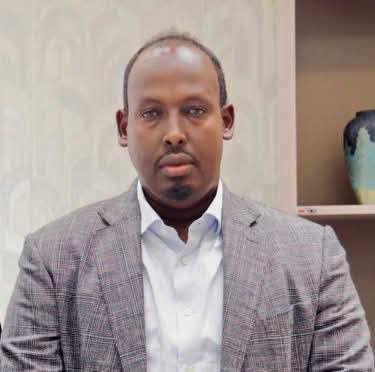
When Nyandarua Senator John Methu sat down for an interview on Citizen TV, he did not arrive with diplomatic hedging. He arrived with numbers. A CT scan conducted at any of the county referral hospitals equipped under Kenya’s National Equipment Service Programme (NESP) costs a patient KSh 6,600. Of that amount, KSh 6,000 flows directly to Sunview Medipro International, the company owned by Eastleigh businessman Abdiweli Mohamed Hassan. The hospital receiving the patient, housing the machine, and providing the radiographers and support staff retains a mere KSh 600 — barely nine percent of the fee.
For insiders familiar with how the NESP arrangement was structured, the revenue split makes a perverse kind of sense. The government, they allege, never actually paid for the machines. Under the fee-for-service model at the heart of NESP, counties are not buying equipment or even leasing it in the conventional sense. They are entering into an arrangement where the contractor supplies, installs, and maintains the equipment, then collects the overwhelming bulk of every scan revenue in perpetuity to recover costs and generate profit. The problem, critics argue, is that the cost-recovery mathematics here appear wildly skewed against the public and toward the supplier — creating what Senator Methu and others have characterised as a mechanism to squander public funds while dressing up the arrangement as healthcare modernisation.
Sunview Medipro International, fully owned by Hassan according to official records, was registered in April 2024. It secured a contract to install CT scan machines in two referral hospitals in each of Kenya’s 47 counties as part of the Sh200 billion NESP framework. The programme also distributes contracts to other companies for services ranging from MRI machines and dialysis units to operating theatres and laboratory equipment, with the full list including Angelica Medical Supplies, Megascope Healthcare, Caring International, Melco Kenya, Obaidulla Contracting and Provered Technologies. But it is Sunview, and by extension Hassan, that has attracted the most sustained scrutiny.
A Company Born Yesterday, Winning Contracts Today
The central irritant for critics is not simply that Hassan is making money — it is the velocity at which a company of zero history accumulated one of the country’s most consequential public health contracts. Sunview Medipro International was registered in April 2024 and is backed by investors from the United Arab Emirates and other markets. That is not years of demonstrated competence, established maintenance networks, or a documented track record in medical equipment delivery. It is months.
Sunview has partnered with global manufacturers including GE, Fuji, and United Imaging. The company and its defenders point to these partnerships as proof of technical credibility. But the sequencing raises questions that have not been satisfactorily answered. Did Sunview hold these partnerships before bidding, meaning evaluators could assess real technical capacity? Or did the partnerships materialise after the contract award as retroactive credibility? The distinction matters enormously in determining whether this was a legitimate competitive process or a predetermined outcome draped in procedural clothing.
The Sunview says it has already begun deliveries, noting that on July 3, 2025, it installed Lamu’s first 128-slice FujiFilm FCT iStream CT scan at the King Fahd County Referral Hospital. Five county referral hospitals, including Mandera, Kisumu’s Jaramogi Oginga Odinga Teaching and Referral Hospital, Kerugoya, and Wajir, have already received advanced CT scanners. By November 2025, Sunview had expanded to 12 new counties including Nakuru, Uasin Gishu, Kisii, Siaya, Migori, Nyeri and Embu, bringing its total number of operational CT units to 29 nationwide. More than 100,000 patients have, by the company’s own count, benefited from services delivered.
On the surface, this looks like a success story. Beneath it, the revenue structure Senator Methu has publicised turns each patient interaction into a question: who is healthcare delivery actually serving?
Under the previous Managed Equipment Service (MES) programme — itself plagued by scandal — counties paid fixed annual fees regardless of how often equipment was used. NESP was sold as a reform, a pay-per-use model that would align contractor incentives with actual healthcare delivery. With NESP, hospitals only pay when equipment is used, unlike under MES where counties had to pay Sh100 million every year as hiring fees for the medical equipment. The pitch was compelling. The implementation, if Senator Methu’s figures are accurate, simply transferred the extraction mechanism from a fixed levy to a per-scan toll, with the contractor capturing 91 percent of each transaction.
The Rice Import Wars: Senator Omtatah’s Accusations
The CT scan controversy does not exist in isolation. Hassan has spent much of 2025 battling a parallel storm over Kenya’s rice importation framework — and the senator leading that charge is not Methu but Busia’s Okiya Omtatah, one of the legislature’s most relentless accountability voices.
In August 2025, Omtatah publicly accused Hassan of leading a rice import cartel that threatened Kenyan farmers, following the government’s decision to allow 500,000 tonnes of duty-free rice imports from India and Pakistan. The import quota was defended by Agriculture CS Mutahi Kagwe on food security grounds, citing a demand-supply gap that domestic production could not bridge. Omtatah traced his concerns to a Senate statement request on July 9, 2025, where he raised issues about bypassing regulatory bodies like the Agriculture Food Authority and questioned the legality and transparency of the rice import allocation to a private entity.
Hassan’s legal machinery moved swiftly. The confrontation escalated dramatically when Omtatah received a demand letter dated August 23, 2025, from prominent lawyer Ahmednasir Abdullahi, threatening legal action unless the senator retracted his Senate statements linking BBS Mall’s ownership to the controversial rice import deal. Omtatah did not flinch. In a letter dated August 25, he refused to apologise, invoking Article 117 of the Constitution and the Parliamentary Powers and Privileges Act, which insulates Members of Parliament from civil or criminal proceedings for anything said on the floor of either House.
Hassan’s legal team responded with surgical precision: “Our client was never allocated any quota to import rice.” Notice what that letter does not say. It does not explain where Hassan’s capital originated. It does not document his business history before BBS Mall. It does not address how he is financing the Sh65 billion Tatu City project. It simply denies one specific allegation while threatening litigation to silence further inquiry.
Omtatah refused to be intimidated. “Parliamentary privilege is not for sale,” he declared in a viral X post. “I will not be gagged for demanding answers on the 500,000 tonnes of duty-free rice imports that threaten Kenyan farmers. This is a battle between cartels and Kenyans. I choose Kenyans.”
The Senate Agriculture Committee has been urged to investigate the beneficiaries of the import deal. That investigation, if it materialises, will need to answer questions that Hassan’s lawyers have so far successfully deflected.
The Minnesota Shadow
If the rice scandal sits at the intersection of domestic politics and agricultural policy, a third controversy pulls Hassan’s name into a far more consequential international arena: the sprawling Minnesota federal fraud and money laundering investigation that has consumed US prosecutors for years and now points directly at Nairobi real estate.
To be absolutely clear: Hassan has not been named, charged, or formally accused in any US court proceeding. What places his story in proximity to the Minnesota investigation is geography, timing, and the nature of the broader ecosystem in which he operates.
In December 2025, First Assistant US Attorney Joe Thompson revealed that half or more of the roughly $18 billion in federal funds that supported 14 Minnesota-run programmes since 2018 may have been stolen. Thompson stated that a significant amount of the fraudulently obtained funds had been sent abroad, and much of it had been used to purchase real estate in Nairobi.
The conduit that US prosecutors have already successfully prosecuted is instructive. Ahmednaji Maalim Aftin Sheikh, a Kenyan national, was indicted for conspiracy to commit international money laundering. Sheikh helped his brother Abdiaziz Farah — sentenced to 28 years in prison — launder and hide fraud proceeds abroad by investing them in Kenyan real estate through a series of sham corporate entities and bulk cash smuggling. Farah purchased an apartment building in the South C neighbourhood of Nairobi and land in Mandera Town.
The probe has produced 78 indictments and 57 convictions, with charges including wire fraud, money laundering, and conspiracy. Defendants transferred nearly $3 million to accounts in Kenya, and one convict admitted to transferring $216,300 towards the Karibu Palms Resort in Diani Beach.
Eastleigh — with its forest of high-rises that appeared seemingly overnight — represents the epicentre of this transformation. Federal investigators describe it as a primary destination for laundered fraud proceeds, where funds obtained through healthcare fraud, identity theft, and pandemic relief scams flow through informal banking networks to Nairobi, where they resurface as gleaming commercial towers and luxury developments.
Hassan’s BBS Mall sits at the commercial heart of Eastleigh. Public records reveal virtually nothing about his business activities before the BBS Mall project. There are no documented smaller developments, no progression of increasingly ambitious projects, no clear narrative of how he accumulated initial capital. This is not in itself evidence of wrongdoing. But it is precisely the profile that triggers investigative scrutiny in money laundering cases — rapid accumulation of capital by a previously unknown developer, high-value property in a district known for informal financial networks, capital sourced from unnamed UAE investors.
As of now, there is no public confirmation that Abdiweli Hassan appears on any official investigation list connected to the Minnesota-Kenya money laundering probe. However, the nature of such investigations typically involves confidential watch lists and sealed investigative records that only become public when charges are filed. Kenya’s Asset Recovery Agency and the Financial Reporting Centre have not publicly commented on whether Hassan or his associated entities are under scrutiny.
The Pattern That Connects It All
What Senator Methu’s CT scan revelations share with Senator Omtatah’s rice cartel accusations and the broader Minnesota cloud is a recurring structural feature: the appearance of an individual extracting enormous value from government-adjacent processes across entirely unrelated sectors simultaneously, without leaving the kind of documented business history that would explain how such diverse access was assembled.
Hassan signed a Sh65 billion agreement with Tatu City Special Economic Zone in October 2025 to develop a 60-acre mixed-use community spanning residential homes, retail spaces, offices, logistics facilities, and religious infrastructure — even as his Sunview company was rolling out CT scanners across the country and his name was surfacing in rice import debates. The ambition is remarkable. The opacity about who is actually financing it is equally remarkable.
The NESP structure, as Methu has articulated it, is not necessarily illegal on its face. Fee-for-service models exist across the world’s healthcare systems. What makes this one suspect is the specific arithmetic: a KSh 6,000-to-KSh 600 split that leaves county hospitals with barely enough to cover operating costs, justified by the argument that the government never paid for the machines upfront. If insiders’ accounts are accurate that the arrangement was deliberately structured to funnel public health revenue toward the contractor rather than toward sustainable county health infrastructure, then this is not healthcare modernisation — it is healthcare capture.
Kenya’s parliamentary oversight mechanisms are now activated. Senator Methu has made his accusations on a major national broadcaster. Senator Omtatah has refused legal intimidation and demanded committee investigations. The Senate Health and Agriculture Committees have the tools to subpoena procurement records, financial disclosures, and contract terms.
The questions waiting for answers are not subtle. Who evaluated Sunview Medipro’s bid and on what criteria? Was the KSh 6,000-per-scan revenue allocation disclosed to county governments before they agreed to participate in NESP? Who are the UAE investors backing Sunview, and have their funds been subjected to anti-money-laundering due diligence? What is the relationship, if any, between Hassan’s business operations and the broader Eastleigh financial ecosystem under scrutiny by US federal investigators?
Hassan has consistently responded to accountability demands with legal threats rather than financial transparency. That posture may insulate him from individual accusations in the short term. It does nothing to answer the structural questions — about a healthcare contractor capturing 91 percent of every scan, about rice import allocations that bypassed regulatory bodies, about a Sh65 billion real estate empire whose capital origins remain undocumented in any public record.