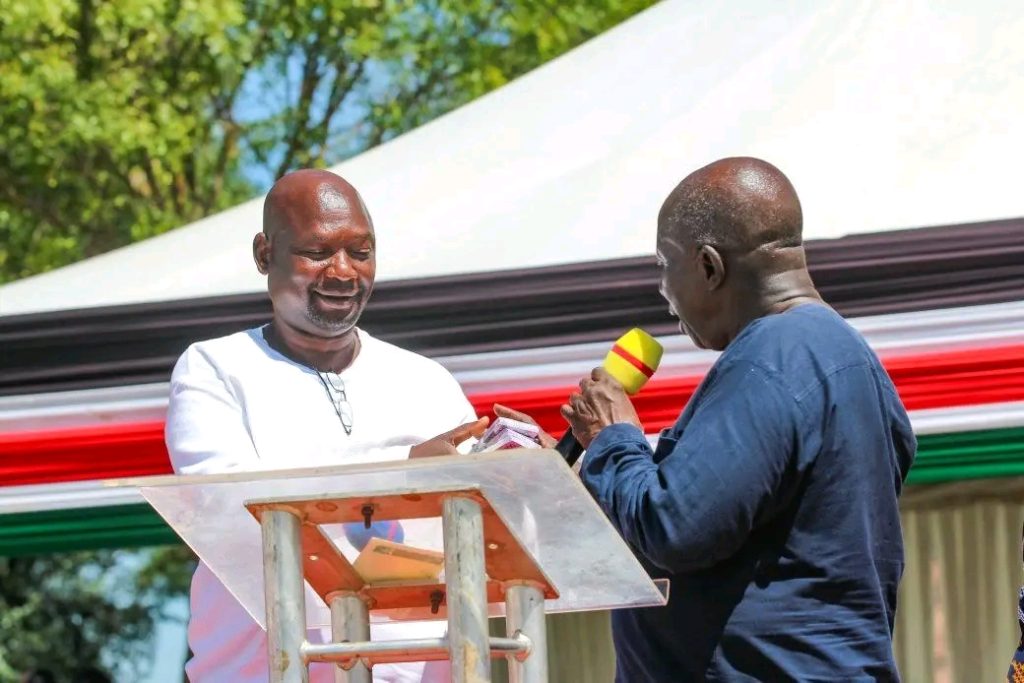
In the quiet but intensely competitive world of grassroots political organising, power rarely announces itself loudly. It is built slowly — through funerals attended, harambees funded, youth meetings convened, and the patient cultivation of trust in markets, churches, and village squares. In Homa Bay County, a man named Johnson Oginga Oduk is building that kind of power.
As the Orange Democratic Movement braces for what is shaping up to be a fiercely contested 2027 General Election, the party’s strategists are increasingly aware that electoral dominance in its traditional strongholds cannot be taken for granted. Homa Bay — which has delivered crushing ODM majorities across successive election cycles — must be actively defended. And that defence begins not at the top, but at the bottom.
It is in this context that Oduk’s emergence carries significance.
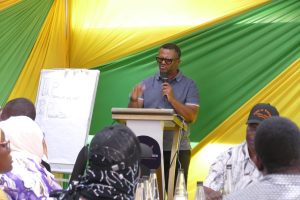
A businessman with deep roots in the county, Oduk has spent recent years cultivating relationships across Homa Bay’s political and social fabric — connecting with youth networks hungry for economic opportunity, engaging business associations that form the county’s commercial backbone, and building bridges between community organisations that often operate in silos. Those who have watched him work describe someone with an unusual ability to bring disparate groups into a common conversation.
“He understands that politics in Homa Bay is not just about the big names,” one county political observer noted. “It is about who shows up, who is trusted, and who can actually move people when it matters.”
That ability to move people matters enormously right now for ODM.
The party is navigating a delicate transition period. Following significant shifts in its leadership hierarchy, ODM is now operating under the stewardship of Dr. Oburu Oginga, who has made no secret of his intention to rebuild and reinvigorate the party’s grassroots structures ahead of 2027. The message from party leadership is consistent: elected officials alone cannot hold the fort. ODM needs mobilisers — people embedded in communities, capable of sustaining party loyalty through the long stretches between election seasons when voters are not paying attention.
Oduk appears to be positioning himself as exactly that kind of figure.
His particular focus on youth engagement is strategically significant. Kenya’s electoral demographics are shifting. First-time voters and young voters under 35 represent a growing share of the electorate, and they are a constituency that established political figures — accustomed to older modes of political engagement — often struggle to reach. Oduk’s approach, observers say, speaks more directly to the concerns and communication styles of this generation.
Whether his ambitions ultimately extend to elective office — a parliamentary seat, a county position, or beyond — remains an open question. Those close to him suggest he has not ruled anything out. But for now, his influence as a strategist, networker and mobiliser appears to be his primary calling card.
For ODM, the stakes in Homa Bay are high. A party that loses its grip on its strongholds does not merely lose seats — it loses the psychological and logistical infrastructure that enables it to compete nationally. Homa Bay, alongside other Nyanza counties, is part of ODM’s arithmetic for any realistic path to the presidency. Protecting it is not optional.
The 2027 election cycle is still more than a year away, but the groundwork is being laid now — in roadside conversations, in community halls, in the careful accumulation of favours and relationships that constitute real political capital.
In that contest for grassroots influence, Johnson Oginga Oduk is quietly, and with apparent purpose, staking his claim.