By Dennis Gichuiri
With just days before global health negotiations resume in Geneva, the AIDS Healthcare Foundation (AHF) has warned that the world risks repeating the inequities of the COVID-19 pandemic unless binding commitments on vaccine and technology sharing are secured.
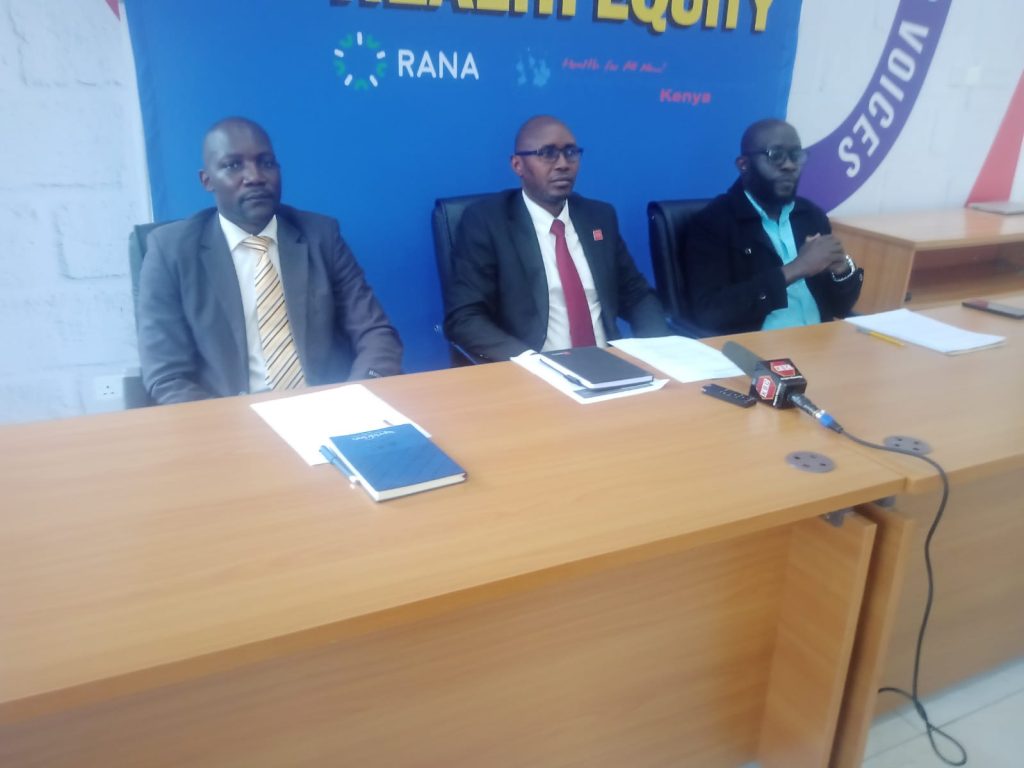
Speaking during the AHF Kenya Pathogen Access and Benefit-Sharing (PABS) press conference, Country Director Dr. Samuel Kinyanjui said the upcoming talks will be decisive for how the world responds to future pandemics.
In three days, 179 WHO member states are set to begin a final round of negotiations on the PABS annex—considered the last unresolved and most contentious component of the global pandemic agreement. The outcome will be forwarded to the World Health Assembly in May for possible adoption.
“What is decided in the next five days will determine, for a generation, whether the world responds to pandemics with equity or repeats the failures we saw during COVID-19,” Kinyanjui said.
He pointed to stark disparities during the pandemic, noting that although Africa accounts for 17% of the global population, it received less than 3% of available vaccines. This, despite African scientists playing a key role in identifying major COVID-19 variants and sharing critical data with the global community.
“That data was used to develop vaccines that never reached us in time,” he said. “These are not just statistics—these are lives that were lost unnecessarily.”
At the center of the current negotiations is a divide between high-income countries and the Global South. While developing nations are pushing for mandatory benefit-sharing mechanisms, including guaranteed access to vaccines and treatments, wealthier countries—particularly in Europe—are advocating for largely voluntary arrangements.
Kinyanjui warned that voluntary systems would fail again.
“We cannot rely on promises. We need binding, enforceable agreements that guarantee access to vaccines, diagnostics, and treatments,” he said.
Among AHF’s key demands are pre-agreed allocations of vaccines proportional to population size, mandatory technology transfer to enable local manufacturing, and financial contributions from pharmaceutical companies that benefit from shared pathogen data.
He also raised concerns about the current structure of global data-sharing platforms, which in some cases allow anonymous access. This, he said, enables companies to use publicly shared data without accountability or obligations to share resulting benefits.
On intellectual property, Kinyanjui argued that life-saving technologies developed from shared global data should not be restricted by long-term patents that limit access in low- and middle-income countries.
The issue has direct implications for Kenya, where more than 70% of medicines are imported. While the country is working toward strengthening local pharmaceutical production, Kinyanjui said meaningful progress depends on access to technology and fair global agreements.
“Without binding provisions, technology transfer will remain out of reach,” he said.
African countries, negotiating as a bloc, have already rejected a previous draft of the PABS annex, citing weak equity provisions. They are expected to push for stronger terms when talks resume.
Kinyanjui called on high-income countries to align their negotiating positions with the principles of fairness and solidarity, while urging African negotiators to remain firm.
“The next five days are critical,” he said. “This is about whether the next pandemic finds us prepared—or once again left behind.”