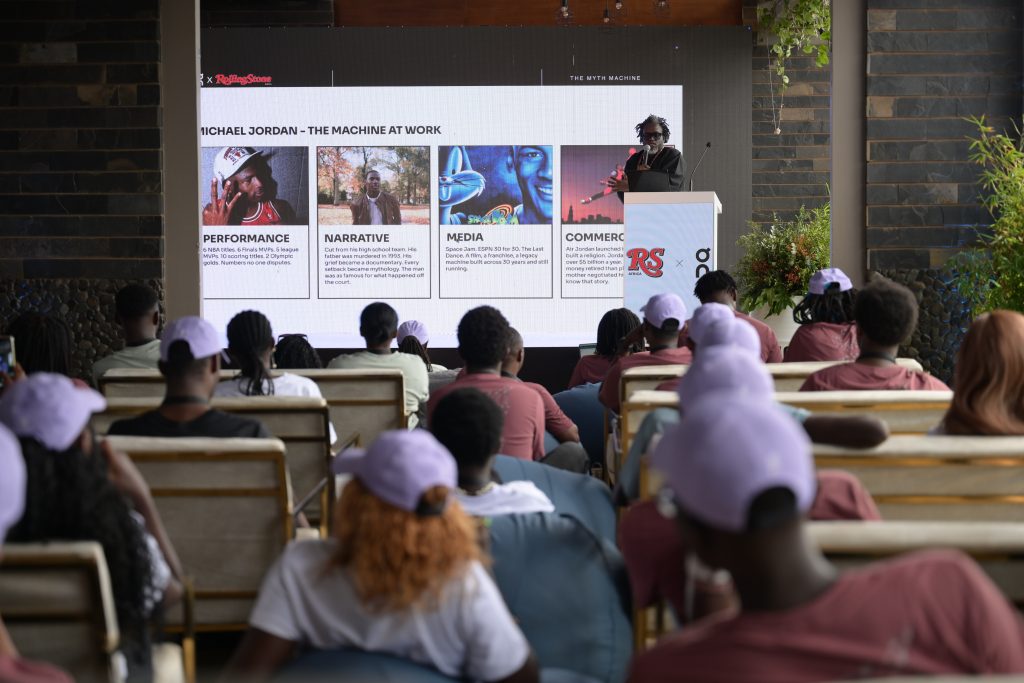
At the ongoing Voices in Motion Creative Summit, Emuron Alemu, Chief Creative Officer at The Quollective, led a session exploring the realities and opportunities in the creative industry. He reflected on what it takes to grow as a creative professional, build a sustainable career and position African talent for greater success on the global stage.
The stakes extend beyond individual careers to the immense economic potential of Africa’s creative industry. Projected to reach $200 billion in value by 2030, the sector is emerging as a significant driver of economic growth, with the potential to expand Africa’s global export footprint and attract strategic investors seeking opportunities in the creative economy.
The Power of Self-Belief
In Africa’s emerging creative economy, talent alone rarely determines how far an individual progresses or the level of success they achieve. Beyond skill and creativity, factors such as self-belief, visibility and the ability to build meaningful connections play an equally significant role in shaping careers.
For Alemu, this is one of the most important lessons he wishes he had learned earlier in his career.
That conviction runs through his reflections on Kenya’s and the wider African creative industry.
“The talent is there, but the systems are yet to catch up. The gap between the two is a matter of belief and building,” he says.
Building Systems to Match Africa’s Creative Talent
Alemu describes the creative industry as fragmented. While there are pockets of excellence, emerging talent and growing international recognition, the infrastructure connecting these elements remains uneven.
He argues that building the right systems is essential to bridging the existing gaps. Formal training, for instance, can give creatives a head start by helping them understand their strengths, identify their niche and navigate the industry with greater clarity and confidence.
Without a solid foundation, many creatives have been left to figure things out independently, spending valuable time discovering their identities, understanding what they can offer and determining where they fit within the wider industry.
“Compared to Western markets, where more developed pipelines allow talent to be discovered early, nurtured and connected to opportunities within the economy, our infrastructure fails to create room for discovery, specialisation, career progression and employment,” he points out.
The lesson is not necessarily to replicate Western systems wholesale, but to recognise what a well-functioning creative ecosystem can achieve. For Kenya and Africa, developing these systems could make the difference between nurturing talented individuals and building an industry capable of supporting them at scale.
Alemu views growing interest from private investors in funding the creative sector as a step in the right direction. Increased investment can unlock opportunities for creatives, strengthen industry infrastructure and support the growth of homegrown talent.
Combined with deliberate government efforts to implement supportive policies, improve access to funding and create an enabling environment, these investments could help transform Africa’s creative sector into a sustainable and competitive industry that creates jobs, attracts investment and drives economic growth.
Owning the African Story on the Global Stage
Looking 15 to 20 years ahead, Alemu offers a simple vision.
“A thriving creative economy means fewer struggling artists and creators,” he says.
Achieving this, he argues, will require the emergence of a strong top tier of creatives capable of shaping the industry, breaking through existing barriers and diversifying their investments across the sector to sustain its growth.
It will also require institutions and brands to partner with creators who build strong personal brands and maintain professional standards, ensuring greater value from their investments. Both brands and creatives must foster an environment where their collaborations are built on trust, mutual value and professionalism.
Alemu also draws encouragement from African work being recognised at the Loeries and Cannes. To him, this recognition demonstrates that African creatives belong on the global stage. The next step, he argues, is to refine their craft and compete more assertively in the international market.
Young creatives, he says, must apply themselves and actively pursue opportunities, noting that possibilities abound for those willing to put in the work.
He believes the time is right for African storytellers to step forward. With events such as the Africa Cup of Nations (AFCON) and Formula One Grand Prix attracting global attention, the continent has an opportunity to capture the world’s imagination.
While stories from other parts of the world have become familiar to global audiences, Africa has a wealth of untold stories that the world is eager to discover. Alemu challenges storytellers to move beyond imitating Western narratives and instead develop distinctive perspectives and styles that resonate with both local and international audiences.
The opportunity, therefore, is not simply to put Africa on the world’s screens. It is to shape how the world sees, understands and experiences African stories.
Above all, it means cultivating a culture in which African creatives believe in the value of what they bring to the world.