Tourism and Wildlife cabinet secretary Rebecca Miano has hailed the Rhino Charge as a model for conservation and community development, commending Rhino Ark Kenya Charitable Trust and its partners for their sustained contribution to environmental protection and improved livelihoods across the country.
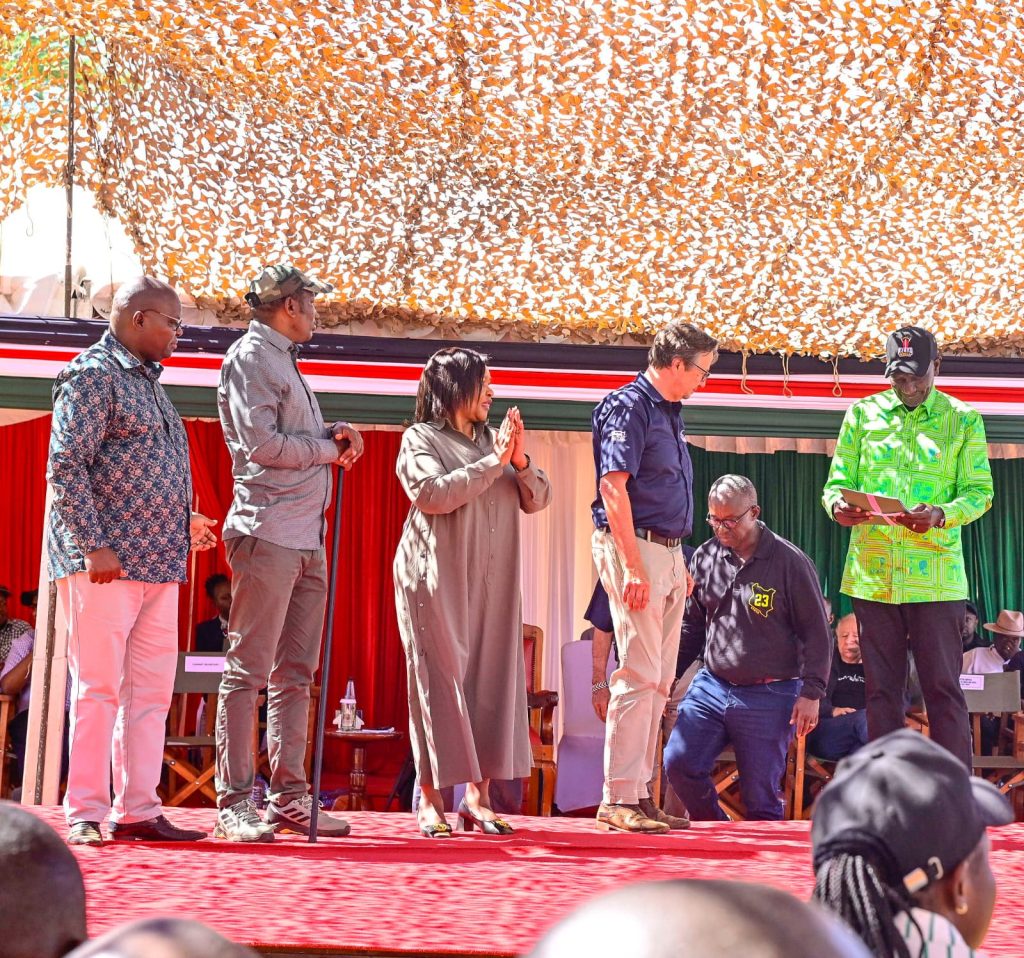
Speaking during the 37th Rhino Charge competition in Samburu County, Miano said the event continues to demonstrate how adventure, conservation and community development can work together to safeguard Kenya’s natural heritage.
Held from May 29 to 31 under the theme “Adventure, Community, Conservation,” this year’s Rhino Charge attracted 65 competition vehicles, including seven first-time entrants.
Tracing the event’s history, Miano noted that the first Rhino Charge was held on February 4, 1989, bringing together 31 vehicles and raising KES 250,000 to support the construction of the Aberdare Electric Fence aimed at protecting black rhinos and reducing human-wildlife conflict.
“What began as a small fundraising effort has grown into one of Kenya’s most practical conservation platforms,” she said.
According to the Cabinet Secretary, Rhino Charge participants and supporters have collectively mobilised approximately KES 2.72 billion for Rhino Ark conservation projects over the years. In addition, more than KES 88 million has been directed towards host-community projects linked to the annual event.
She highlighted the tangible conservation gains achieved through the initiative, including the construction and maintenance of approximately 853 kilometres of electric conservation fencing across key ecosystems. These include 410 kilometres in the Aberdare ecosystem, 316 kilometres around Mt. Kenya, 50 kilometres around Kakamega Forest, 43 kilometres around Eburu Forest and 32 kilometres in the South-Western Mau landscape.
“The results can be seen on the ground,” Miano said. “These are not abstract figures. They are crops saved, forests secured, rivers protected, wildlife conserved, and families given greater safety and dignity.”
The Cabinet Secretary noted that the fencing programme and associated conservation activities have helped protect more than 90,000 households from human-wildlife conflict, reached 184 schools through conservation education programmes and improved the conservation of approximately 652,000 hectares of protected areas and water catchments.
She stressed that conservation remains critical to Kenya’s economic and environmental future.
“When we protect forests and wildlife habitats, we protect water, food, livelihoods, tourism, biodiversity and Kenya’s future,” she said. “Conservation is not a side issue. It is a national responsibility, an economic necessity, and a legacy we must safeguard for generations to come.”
Miano observed that the success of Rhino Ark reflects the strength of partnerships between government agencies, local communities, conservation organisations, development partners and the private sector. She added that every kilometre of fence serves as a practical solution to human-wildlife conflict while safeguarding forests from illegal logging, poaching, charcoal burning and encroachment.
The Cabinet Secretary affirmed that Rhino Ark’s work aligns with the Government’s Bottom-Up Economic Transformation Agenda, Kenya Vision 2030 and national commitments on climate action, biodiversity conservation and forest restoration.
“As a Ministry, we remain committed to strengthening partnerships that advance conservation and empower communities living alongside protected ecosystems,” she said. “Communities are not simply stakeholders. They are custodians of our natural heritage.”
Congratulating participants, sponsors, volunteers and conservation champions, Miano thanked Samburu County for hosting the event and urged Kenyans to continue supporting conservation efforts.
“The greater victory is proving that adventure can serve conservation, competition can serve community, and love for the outdoors can protect forests, wildlife and people,” she said.