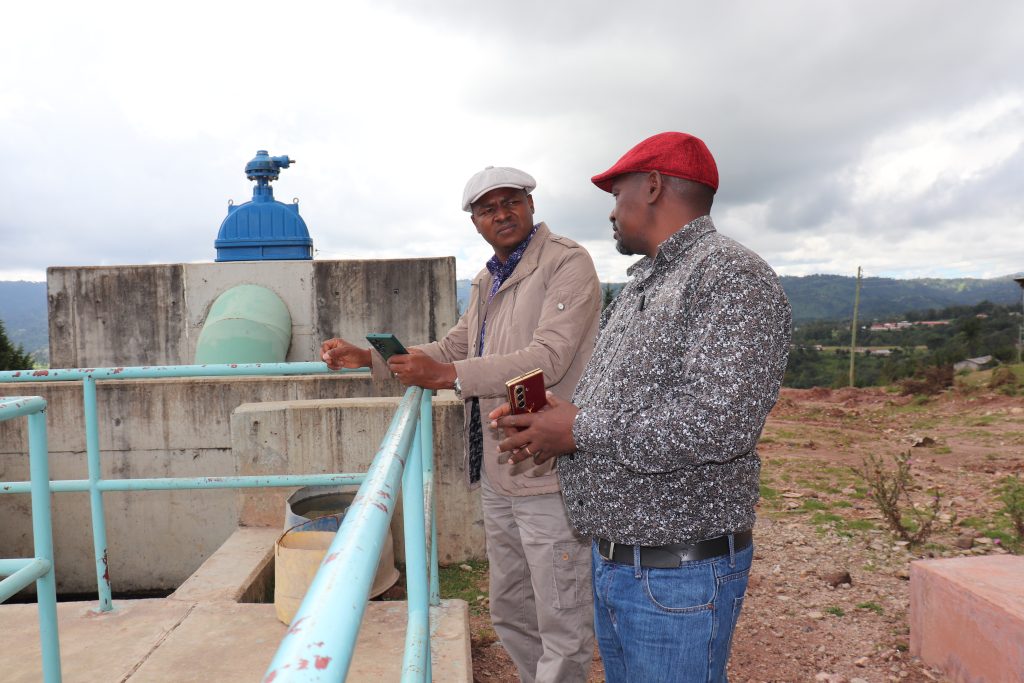
The Muruny (Siyoi) Dam in West Pokot County is edging closer to completion, raising hopes for improved water access, economic growth and climate resilience for more than 350,000 residents expected to benefit from the project by 2035.
During an inspection tour of the dam and the River Sabwani Flood Control Works in Trans Nzoia County, officials from the National Water Harvesting and Storage Authority (NWHSA) highlighted the transformative impact the projects are expected to have on communities that have long grappled with water shortages and recurring floods.
With construction now at 89.4 per cent completion, the Muruny Dam project is emerging as one of the country’s most significant water infrastructure investments aimed at addressing chronic water insecurity in the North Rift region.
NWHSA Board Chairperson Dr. Jane Mwikali Makau said the project represents more than just a major engineering undertaking, noting that it is expected to unlock social and economic opportunities for thousands of households.
“The impact of these projects goes beyond infrastructure. They are about improving livelihoods, enhancing food security, protecting communities from disasters and ensuring sustainable access to water for future generations,” said Dr. Makau.
The project includes the construction of a dam wall, intake tower, raw water pipeline and supporting infrastructure that will supply water to homes, institutions and businesses across West Pokot County.
According to NWHSA Director Benjamin Mwololo, the dam is expected to become a critical lifeline for communities that have historically relied on seasonal rivers and unreliable water sources.
“The Muruny Dam project will be transformative for West Pokot. It will provide a sustainable source of water for domestic use, stimulate economic activities and improve the quality of life for thousands of residents,” said Mwololo.
Beyond domestic consumption, the project is expected to support agriculture, livestock production and small-scale industries, sectors that form the backbone of the local economy.
Officials noted that improved water availability could help reduce the burden on women and children who often travel long distances in search of water, while also boosting public health outcomes through access to cleaner and safer water supplies.
Meanwhile, in neighbouring Trans Nzoia County, residents living along the River Sabwani basin are already beginning to benefit from newly completed flood control infrastructure designed to reduce the impact of seasonal flooding.
The KSh15 million project involved the extension of flood control dykes, construction of cut-off drains and erosion control measures aimed at protecting homes, farms and public infrastructure from flood damage.
Mwololo said the intervention demonstrates how strategic investments in climate adaptation can help communities withstand increasingly unpredictable weather patterns.
“The Sabwani project demonstrates the importance of proactive investment in climate resilience. Through these interventions, we are protecting homes, agricultural land and critical infrastructure while safeguarding livelihoods for future generations,” he said.
Engineer David Gitau explained that the flood control works were designed to address years of destruction caused by River Sabwani overflowing during heavy rains.
“The dyke extension and drainage systems have strengthened the area’s flood protection capacity and will help reduce losses previously experienced by local communities during rainy seasons,” said Eng. Gitau.
The project also incorporates environmental conservation measures, including slope stabilization and community awareness programmes aimed at promoting sustainable land management practices.
Engineer Colleta Mwage said combining engineering solutions with environmental stewardship is essential for long-term flood management.
“We have ensured that the engineering solutions are complemented by environmental conservation initiatives because long-term flood management requires both infrastructure and responsible stewardship of natural resources,” she said.
At the Muruny Dam site, Resident Engineer Eng. Tabitha Kamau reported that major milestones have already been achieved, including completion of the spillway, diversion culvert, intake tower footbridge and significant sections of the raw water transmission pipeline.
“Most of the key structures have been completed, and the remaining works are concentrated on final dam construction activities, auxiliary facilities and community support projects,” she said.
As the project enters its final stages, expectations are growing that the dam will become a game-changer for West Pokot, helping secure water supplies, strengthen resilience against climate shocks and drive long-term socio-economic development in the region.