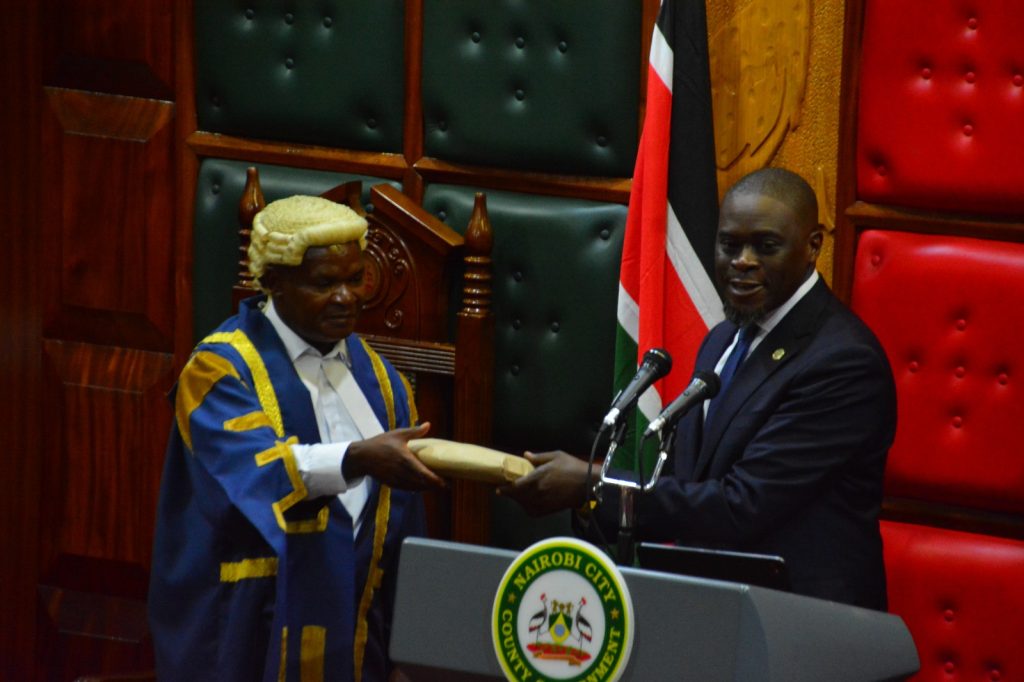
Nairobi Governor Johnson Sakaja has dismissed speculation that his recent meeting with President William Ruto signaled plans to transfer county functions back to the National Government.
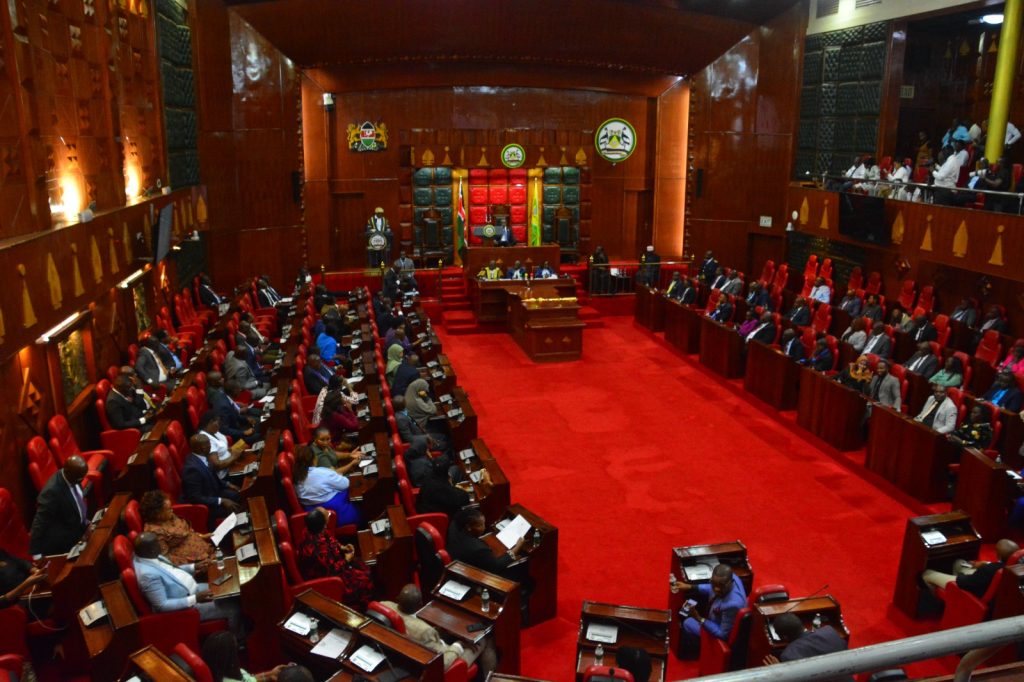
Speaking during his State of the County Address at the Nairobi County Assembly, Sakaja said the claims were a “misadventure” and insisted that Nairobi’s devolved mandate would remain intact even as the county continues to work closely with the national administration.
“The functions bestowed upon us by the Constitution will remain county functions. We shall not transfer them,” Sakaja said.
He noted that Nairobi’s position as the capital city makes collaboration between the two levels of government inevitable, but warned that such engagement must not be used to undermine devolution.
“Nairobi’s position as the capital city makes intergovernmental collaboration both inevitable and necessary, but not at the expense of devolution,” he said.
The Governor also revisited the Nairobi Metropolitan Services (NMS) period, describing it as costly and demoralising to county staff. He blamed the arrangement for leaving the county with about Sh16 billion in pending bills.
Despite pushing back against fears of a power shift, Sakaja said structured cooperation with the National Government over the past two years has helped deliver key development projects in the city.
He cited the construction of classrooms, road construction and recarpeting works across Nairobi, with support from national agencies including the Kenya Urban Roads Authority (KURA) and the Kenya Rural Roads Authority (KeRRA).
Sakaja further revealed that Nairobi and the National Government are implementing a joint cleanliness, roads and water improvement programme, including a large-scale waste management rollout expected to begin in April.
He said funds have already been allocated, a contractor selected, and land secured in Ruai for a modern waste-processing facility. Once operational, the plant is expected to convert waste into fertiliser and energy.
Additional national support is also expected in urban roads, sewerage expansion, water supply projects and public lighting, with stalled projects initiated under the defunct NMS set for completion through relevant national agencies.
Sakaja maintained that the cooperation model is designed to preserve Nairobi’s constitutional mandate while enabling faster delivery of large-scale projects.