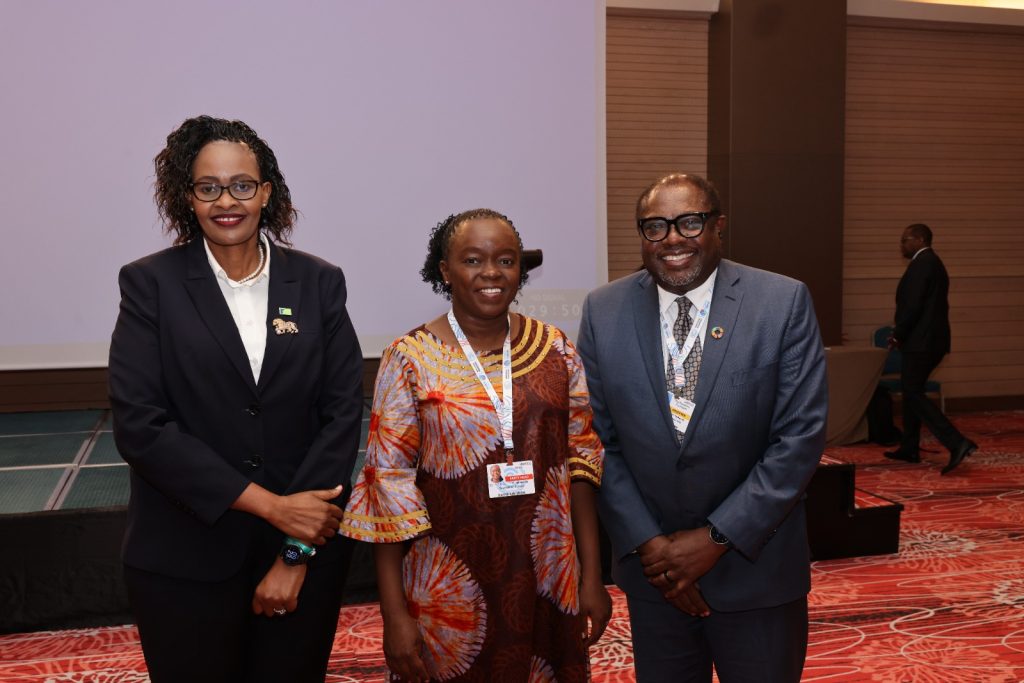
Mrs. Annastacia Kimtai, Managing Director, KCB Bank Kenya, Hon. Dr Deborah Barasa, Cabinet Secretary, Ministry of Environment, Climate Change and Mr William Asiko, KCB Group Board Director at the KCB Bank Kenya high-level COP31 side event in Antalya, Türkiye.
KCB Bank is seeking to strengthen partnerships and mobilise investment to accelerate the transition to cleaner energy in Kenya’s education sector, as financial institutions and government leaders explore ways to scale up climate action.
The bank hosted a high-level side event at the 31st United Nations Climate Change Conference (COP31) in Antalya, Türkiye, bringing together government officials and key stakeholders to discuss sustainable finance, climate action and investment opportunities in Kenya.
Held under the theme “Strengthening Strategic Partnerships for Sustainable Finance, Climate Action and Investment in Kenya,” the session focused on innovative financing solutions to support the decarbonisation and greening of schools, technical and vocational education and training (TVET) institutions and universities.
The engagement was led by KCB Bank Kenya Managing Director Annastacia Kimtai and attended by Environment, Climate Change and Forestry Cabinet Secretary Deborah Mlongo Barasa and Principal Secretary for Environment and Climate Change Festus Ng’eno.
Since 2022, KCB has rolled out a clean energy financing pilot worth more than KSh2 billion, supporting 600 schools and 60 TVET colleges to adopt cleaner energy solutions.
The programme has helped participating institutions reduce energy costs, lower reliance on biomass fuels and improve the reliability of their energy supply.
Speaking at the event, Barasa outlined the Government’s policy frameworks and commitment to achieving universal access to clean cooking by 2028.
She also highlighted the potential to expand the programme to 10,000 secondary schools, 250 TVET institutions and 42 universities, a scale-up estimated to require US$460 million in financing.
Participants identified the need to mobilise additional funding through concessional financing, risk-sharing instruments and technical assistance to attract more development finance institutions and private sector investors.
Such partnerships are expected to help bridge financing gaps and make clean energy investments more accessible to learning institutions.
Through its clean energy financing initiatives, KCB is positioning itself as a key financial sector partner in Kenya’s climate transition, supporting the country’s climate commitments while promoting cleaner energy, conservation of natural resources and healthier learning environments.