18 arms-control and non-proliferation experts call for an independent investigation into alleged chemical weapons attacks by Sudanese forces
Fresh allegations that chemical weapons have been used in Sudan’s civil war are drawing renewed international attention, with a group of arms-control and non-proliferation experts saying evidence that has emerged since 2025 warrants an independent investigation.
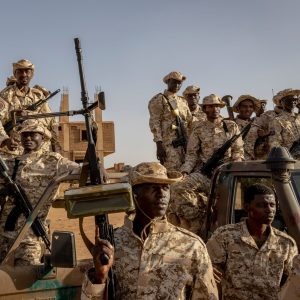
Sudan has been embroiled in a war between the Sudanese Armed Forces (SAF) and the Rapid Support Forces (RSF) since April 2023. The conflict has caused a severe humanitarian crisis, with millions of people displaced and large numbers of civilians affected by fighting and shortages of essential services.
The latest allegations centre on claims that Sudanese army forces used chemical agents during attacks in 2024.
Experts Call for OPCW Investigation
In a letter published on September 29, 2026, 18 experts said evidence that emerged after the United States accused Sudan of using chemical weapons in May 2025 “strongly supports the accusation”.
The letter was prepared by Gregory Koblentz, director of the Biodefense Graduate Program at George Mason University, and published by the Center for Arms Control and Non-Proliferation.
Among the signatories are Robert Mikulak, a former US ambassador to the Organisation for the Prohibition of Chemical Weapons (OPCW); Paul Walker, head of the Chemical Weapons Convention Coalition; and Daryl Kimball, executive director of the Arms Control Association.
The experts cited reports alleging that chlorine-filled cylinders were used in at least two attacks in September 2024 and that aerial bombs designed to disperse chlorine gas had been produced.
They stressed, however, that the allegations still require independent verification.
The experts said the OPCW has several mechanisms available to establish whether chemical weapons were used, including an investigation, a technical assistance mission or, under certain circumstances, a challenge inspection under Article IX of the Chemical Weapons Convention.
Such an investigation could help establish the nature of the alleged attacks, identify the weapons involved and determine whether chemical agents were used in violation of the convention.
Sudan has been a State Party to the Chemical Weapons Convention since 1999 and is therefore bound by the treaty’s prohibition on the development, production, stockpiling and use of chemical weapons.
US Maintains Pressure
The allegations have also drawn renewed attention in Washington.
US Senator Chris Van Hollen recently said the United States had concluded that the Sudanese Armed Forces used chemical weapons and that additional evidence had emerged since that determination.
Speaking in a recorded statement screened during a presentation of the documentary The Invisible Weapon at the National Press Club in Washington, Van Hollen called for an independent international investigation and accountability for those responsible.
He also urged Sudanese authorities to cooperate with the OPCW and allow an investigation to establish the extent of any chemical weapons programme.
The Sudanese army has denied the allegations.
Investigations published by The Washington Post and The New York Times in September 2026 have also reported alleged evidence of chemical weapons production and use by Sudanese forces. Those reports, like the other claims, have not been presented as a final finding by an international investigative body.
Regional Powers Drawn Into the Conflict
The allegations come as Sudan’s war continues to attract regional and international involvement.
Egypt has maintained close relations with the Sudanese Armed Forces, with various reports alleging political, intelligence and military cooperation. Reports have also linked Egyptian territory to military activity connected to the Sudan conflict.
Reuters previously reported the presence of Turkish-made combat drones at East Oweinat Airport in southwestern Egypt, while The New York Times has reported that Akıncı drones were being used in operations linked to the conflict.
Turkey has also been linked to military equipment supplied to Sudan’s armed forces.
A Washington Post investigation published in March 2025 cited documents, communications, commercial records and flight data that it said showed Turkish-made weapons and drones reaching Sudan.
The report said Sudan’s Defence Industries System had signed a contract worth about $120 million with Turkish defence company Baykar for drones and munitions. Ankara has denied providing military support to either side in the Sudan conflict.
Saudi Arabia’s Diplomatic Role
Saudi Arabia has played a prominent diplomatic role through the Jeddah peace process, which sought to bring the Sudanese army and RSF to the negotiating table.
The kingdom has also maintained high-level contacts with Sudanese army chief Abdel Fattah al-Burhan.
On September 29, Saudi Crown Prince Mohammed bin Salman spoke with Burhan by telephone and reaffirmed Riyadh’s support for Sudan’s stability, sovereignty and territorial integrity, according to Saudi statements.
Saudi Arabia’s role has nevertheless attracted criticism from some observers, particularly over its relationship with Sudan’s military leadership and its broader regional interests.
Reuters has also reported that Riyadh mediated a proposed $1.5 billion Pakistani arms deal involving the Sudanese army before subsequently asking for the deal to be cancelled and informing Islamabad that it would not finance it.
With fighting continuing and competing regional interests shaping the conflict, pressure is growing for an independent mechanism to establish whether chemical weapons have been used in Sudan.
For now, the allegations remain subject to investigation, while the Sudanese army continues to deny responsibility for chemical weapons use.