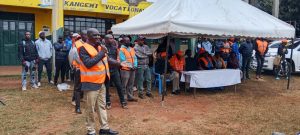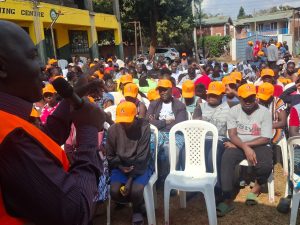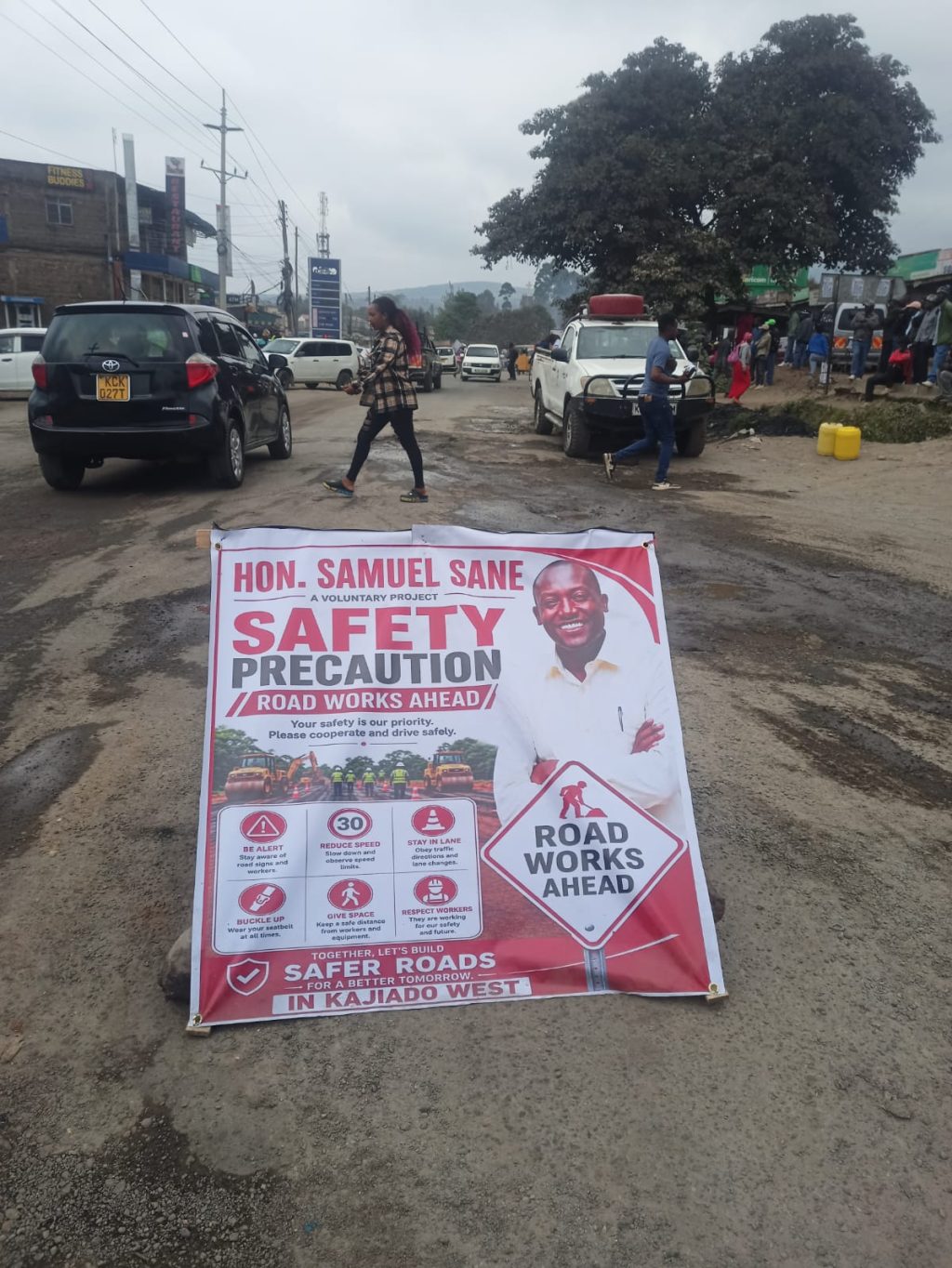
Frustrated by deep potholes, persistent traffic gridlock, and government silence, residents of Kajiado West have taken matters into their own hands—literally.
On Thursday, while national leaders in Nairobi focused on the reading of the 2026/27 budget, a crowd of weary citizens gathered on the dilapidated road linking Kiserian to the capital city. Armed with bags of cement, ballast, and shovels, the community began manually patching the crater-sized potholes that dictate their daily lives.
The citizen-led initiative was mobilized by local leader Samuel Sane after a year and a half of unreturned calls to the Kenya National Highways Authority (KeNHA).
“The challenge here is the potholes that are leading to traffic jams. Residents of Kajiado West are suffering,” Sane said as the community worked on the road. “For years, no leader has paid attention… In some cases, patients have lost their lives due to delays caused by the road’s inaccessibility.”
The daily reality for Kiserian residents has become an exhausting test of endurance. What should be a straightforward commute to Nairobi has turned into a multi-hour ordeal, damaging vehicles and choking local commerce.
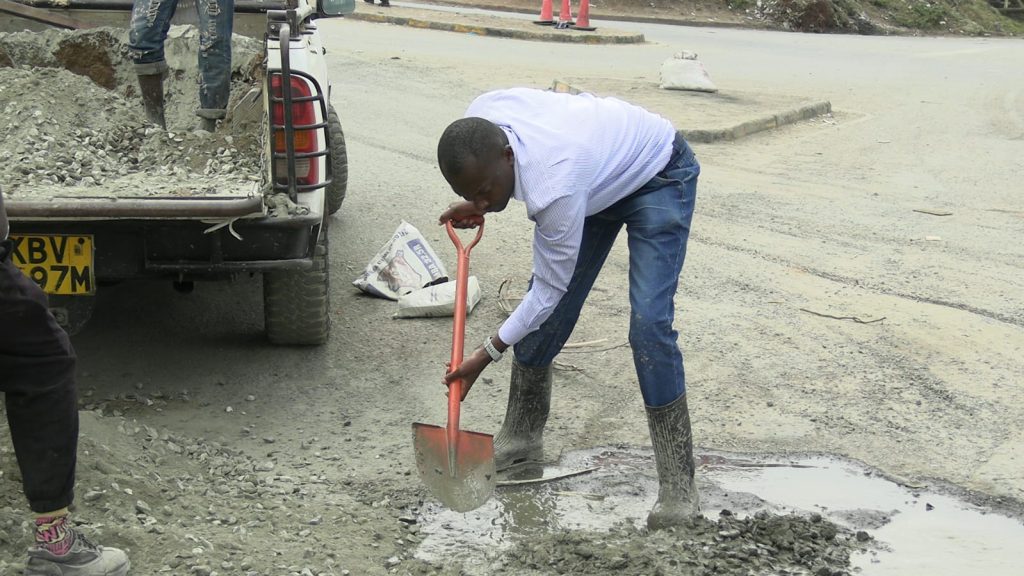
“There are a lot of traffic jams on this road and we spend several hours in traffic,” explained resident William Ng’ang’a. “One thing we all need is a good road because it helps us a lot. We were told that it would be expanded into a dual carriageway so that even as we move towards the 2027 elections we will have something that we are proud of.”
The infrastructure decay is compounded by a worsening utilities crisis. Beyond the broken roads, rapidly expanding neighborhoods across Kajiado West face recurring water shortages, forcing families to buy expensive water from vendors or travel long distances to look for it.
By turning to “do-it-yourself” civil engineering on budget day, the people of Kiserian sent a sharp visual message to the state: they can no longer afford to wait for government promises to dry up.