The draft Sports Bill 2026 and the National Sports Policy 2025 have been hailed as twin pillars designed to play a pivotal role in overhauling and eventually transforming the sports ecosystem in Kenya.
Cabinet Secretary for Youth Affairs, Creative Economy and Sports Salim Mvurya has termed the proposals in the two documents as a critical step for Kenya’s sports landscape.
The documents propose various radical and positive changes that will touch the entire sporting architecture.
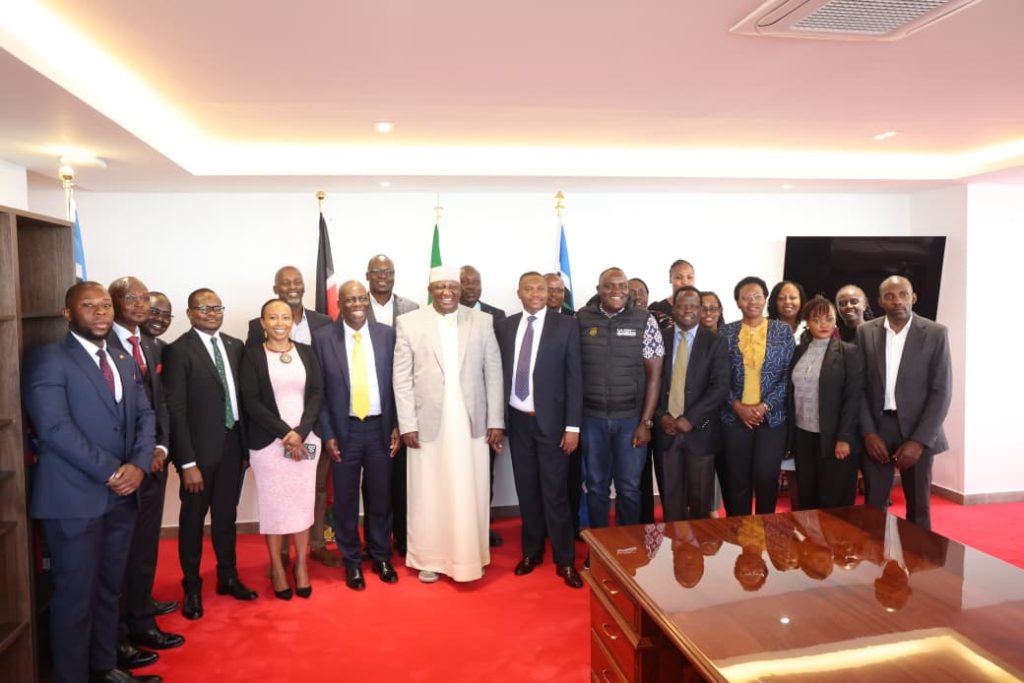
The CS was speaking on Friday at Talanta Plaza when he received the draft copies of the proposed legislation from the taskforce that was compiling the proposals.
Mvurya noted that the biggest impact of these proposed laws was to transit sports as a mere recreation activity into an industry that can support livelihoods, transform communities and spur national development.
“These documents contain salient proposals that speak to the current realities facing the sports sector. They have addressed critical issues especially on matters to do with athletes’ welfare, integrity in sports, infrastructure and talent development,” he said.
The CS, who was accompanied by the PS Sports Elijah Mwangi, termed the proposals in the documents as progressive and ones that aligned with the government’s view of sports as a key anchor in the country’s economic transformation as well as a core driver in national development.
Among the issues addressed by the new laws include the athletes’ welfare, the management of sports infrastructure, the dynamics of talent development in schools, the entrenching of integrity in sports, governance and leadership in federations, the role of technology and data in enhancing sports sector and strengthening emerging trends in sports among them sports science.
The new law also proposes formal recognition of fans’ associations and groups to inculcate discipline and order and eliminate cases of hooliganism in sports.
The CS noted the need to collaborate closely with other ministries to align the proposed law on areas of convergence in transforming the sports sector.
He cited the Ministry of Education which was critical for talent development amongst learners as well as the Ministry of Health which was vital in supporting anti-doping efforts.
“We need to align this law with other ministries to avoid leaving gaps in execution and implementation. This will also strengthen our operational capacity as a ministry to grow the sports sector,” he said.
The taskforce to review the sports policy and Sports Act 2013 was constituted in November 2024 with a mandate to review and make recommendations on how to transform the sector.
Led by the Chair, Senior Council John Ohanga, the taskforce has introduced far-reaching proposals including the creation of new bodies including National Sports Development Fund and National Sports Regulatory Authority to support financial and governance issues in the sector.
Speaking while handing over the draft report, the chair said the law had also proposed to have clear defined timelines for officials and senior officers in sports federations.
He also said the new law would prohibit officials from serving in multiple functions that would inhibit their abilities to perform their duties.
“This law will cure the governance issues in federations. It is introducing defined timeframes for leaders to serve,” he explained.
The proposals will be subjected to stakeholders’ scrutiny including relevant parliamentary committees before being presented to cabinet for approval. Sports, according to the Constitution, is a devolved function. This implies that the new law will also be taken to the Senate for concurrence and approval.
The CS also encouraged stakeholders to interact with the proposals and give suggestions on how the document could be improved to allow a more-inclusive final document.