Malava constituency has erupted into one of the most intense political theatres in the country as the November 27 by-election narrows into a high-voltage contest between UDA’s David Ndakwa and DAP-K’s Seth Panyako. What was expected to be a routine mini-poll to replace the late MP Malulu Injendi has ballooned into a symbolic test of President William Ruto’s political grip and the opposition’s capacity to resist it.
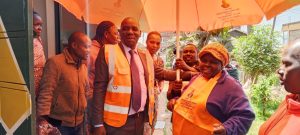
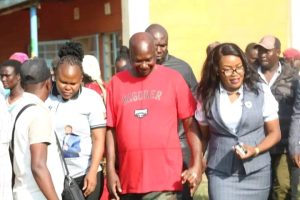
Ndakwa’s campaign has been a masterclass in organisation and state-backed confidence. For two straight weeks, he has swept across the constituency’s seven wards framing himself as the steady, seasoned candidate who can keep Malava plugged into the heart of government. His message is simple and repetitive: experience wins development. It is a pitch grounded in his decade-long record as West Kabras MCA, and one he delivers with the certainty of a man who believes the constituency leans naturally towards the government side.
But the real story is the machinery behind him. Ndakwa has drawn in a political cast rarely seen working this closely in a by-election: Prime Cabinet Secretary Musalia Mudavadi, National Assembly Speaker Moses Wetang’ula, Kakamega Governor Fernandes Barasa, Cooperatives CS Wycliffe Oparanya and several MPs. The presence of county and national heavyweights marching in unison has given Ndakwa’s campaign an unmistakable aura of inevitability.
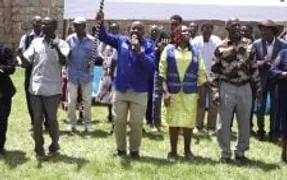
At the centre of this orbit, however, is President Ruto’s powerful aide, Farouk Kibet. Farouk has effectively taken charge of the ground operation with an intensity that has reshaped the entire race. His days start before sunrise and stretch late into the night. On Friday at 6:32 am, he was already rallying residents of Lukova in Manda-Shivanga, urging them to honour the legacy of the late Injendi by keeping the seat within the government’s fold. By mid-morning he was energising crowds in Chemuche; by afternoon he was sharing a stage with Mudavadi, Wetang’ula and Oparanya in South Kabras; and by nightfall he was in Chegulo Market, switching on a new floodlight under the government’s rural lighting programme a carefully timed moment that Ndakwa’s team showcased as proof of “leadership that works.”
Farouk’s constant presence, sharp messaging and ability to unite rival political factions have transformed Ndakwa’s bid into one of the most coordinated by-election offensives in recent memory. His visibility has galvanised UDA supporters while rattling the opposition, which now accuses the government of staging an overwhelming show of force.
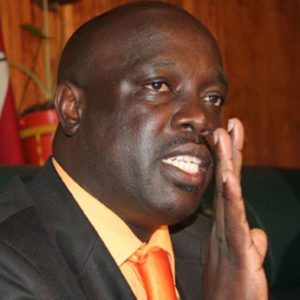
Across the divide, Seth Panyako is running a very different race. Where Ndakwa leans into state power, Panyako positions himself as the res the candidate of defiance. His rallies are bold, emotional and intentionally confrontational. He tells voters that Malava must break free from what he calls “external control,” insisting that electing him would restore independence to the constituency. His messaging taps into a growing pool of youth frustration and the everyday struggles many residents attribute to the government’s economic policies.
Panyako’s revolt has attracted a formidable opposition axis. Former Defence CS Eugene Wamalwa, Trans Nzoia Governor George Natembeya and former Deputy President Rigathi Gachagua have all thrown their weight behind him, turning his campaign into a rallying point for those seeking to challenge the government’s rising influence in Western Kenya. Their strategy is to tear down Ruto’s economic narrative while casting Ndakwa as a continuation of state influence that Malava should resist.
As the campaigns close and the noise fades across Kabras North, South Kabras, Butali, West Kabras, Shirugu-Mugai and the rest of the constituency, voters now face a stark choice. Ndakwa represents alignment with national power and the promise of government-backed development. Panyako represents rebellion, independence and the frustrations simmering beneath the surface.
On November 27, Malava will not just choose an MP. It will send a message one that could either cement Ruto’s expanding footprint in the region or expose a pocket of resistance strong enough to shake his political calculus.