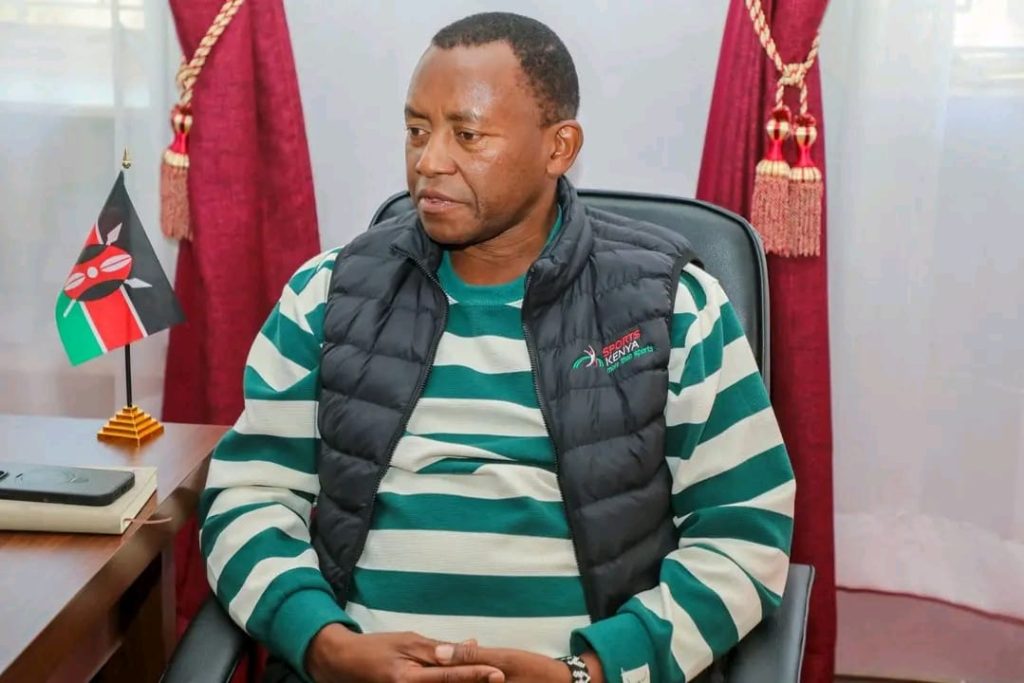
The much anticipated corruption-related court case involving Sports Kenya Deputy Director Gabriel Komora is set to come up before the Milimani Law Courts, with governance activists and sports stakeholders renewing calls for greater accountability at the State corporation.
The court proceedings have drawn fresh attention to questions surrounding the management of public resources at Sports Kenya, coming only days after Kenya secured the historic rights to host the 2029 World Athletics Championships in Nairobi.
Kenya was awarded the 2029 championships by the World Athletics Council on September 15, making Nairobi the first African city to host the global athletics showpiece.
The event is expected to place renewed focus on the management of sports infrastructure and public funds ahead of the championships.
The matters before the Milimani courts include HCACECPET/E023/2026 and HCCHRPET/E119/2026, which have become part of wider public debate concerning governance and accountability within Sports Kenya.
Governance campaigners say the court process provides an opportunity for relevant institutions to independently examine allegations raised against officials and establish the facts through due process.
Komora has previously faced scrutiny in Parliament in his capacity as Sports Kenya acting Director General.
In October 2025, the National Assembly’s Public Investments Committee questioned Sports Kenya management over expenditure on stalled and abandoned stadium projects, including consultancy and feasibility costs running into hundreds of millions of shillings.
Parliamentary records show that MPs questioned management over proposed stadium projects in Nairobi, Kisumu and Eldoret, as well as cost escalations and other audit queries dating back several years.
The scrutiny has now taken on greater significance following Kenya’s successful bid to host the 2029 World Athletics Championships.
Sports stakeholders and governance campaigners are arguing that the country cannot afford weak accountability mechanisms at institutions expected to oversee the infrastructure and logistics required for an international event of such magnitude.
They want officials facing credible corruption or governance allegations to be subjected to due process and, where investigations establish wrongdoing, appropriate action taken.
The campaigners have particularly called for a stronger accountability framework at Sports Kenya, saying public officials entrusted with sports infrastructure and taxpayer-funded programmes must be able to account for decisions involving public money.
They have also urged the Ethics and Anti-Corruption Commission (EACC) and the Assets Recovery Agency (ARA) to examine any financial or asset-related concerns that fall within their mandates.
However, allegations circulating about individual officials remain allegations unless established through investigations or court proceedings.
The concerns follow earlier parliamentary scrutiny of Sports Kenya’s management.
A parliamentary committee reported questions over billions of shillings spent on stadium projects, including proposed facilities that had not materialised despite expenditure on consultancy and feasibility studies.
For sports stakeholders, the 2029 World Athletics hosting decision has raised the stakes.
The championships will bring the world’s leading athletes to Nairobi and require Kenya to demonstrate that its sports institutions can manage major infrastructure, procurement and event-related expenditure transparently.
Youth Affairs, Creative Economy and Sports Cabinet Secretary Salim Mvurya said the successful bid reflected investment and collaboration between the Government, Athletics Kenya and other partners, describing the hosting rights as an opportunity to strengthen Kenya’s sporting infrastructure and capacity.
The National Olympic Committee of Kenya also described the award as a historic moment for Kenya and Africa.
Against that backdrop, campaigners say the priority should be ensuring that officials entrusted with preparations for the global event meet the highest standards of integrity and accountability.
They argue that where investigations establish corruption, abuse of office or misuse of public resources, those found responsible should face the appropriate legal and administrative consequences.
The court proceedings involving Komora are therefore being closely watched by sports stakeholders as part of the wider debate over governance at Sports Kenya.
The campaigners say the outcome of the cases, together with any independent investigations undertaken by competent agencies, should help establish the facts and determine whether further action is warranted.
With less than three years to the 2029 championships, they maintain that Kenya’s preparations should be accompanied by strong financial controls, transparent procurement and accountable leadership across the sports sector.