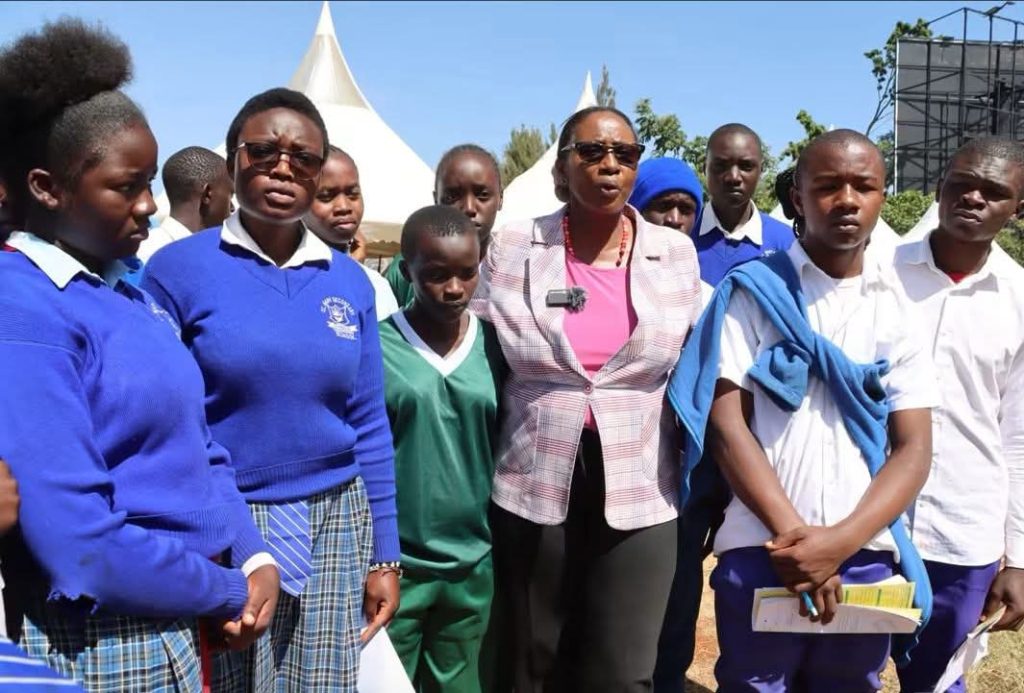
Dagoretti North MP Beatrice Elachi is increasingly placing education at the centre of her constituency development agenda, with bursary distribution emerging as one of the most visible ways through which the National Government Constituencies Development Fund (NG-CDF) reaches households across the five wards.
The constituency’s 2025 financial statements show that Dagoretti North received an approved NG-CDF allocation of Sh179.48 million for the 2024/25 financial year, while the allocation rose to Sh192.61 million for 2025/26—an increase of about Sh13.13 million, or 7.3 per cent.
Education accounts for a significant share of the constituency’s development priorities.
The constituency’s published project plan provides for Sh26 million for secondary-school bursaries and Sh13.52 million for tertiary institutions, bringing the earmarked bursary allocation to approximately Sh39.52 million.
The figures are complemented by a process that has increasingly taken bursary applications closer to residents.
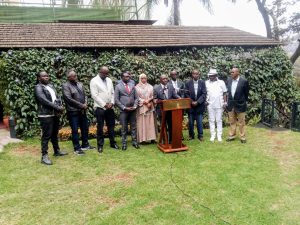
In January 2026, Elachi launched the latest NG-CDF bursary application exercise covering students from Kawangware, Kilimani, Kileleshwa, Kabiro and Gatina wards.
The exercise was presented as part of efforts to support vulnerable students to access education.
The approach is significant in a constituency whose NG-CDF records describe education, security, climate-change mitigation and bursary awards as among areas where the fund has recorded notable achievements.
The constituency’s 2025 annual report also says its development priorities are identified through public participation and are intended to reach communities at grassroots level.
A key feature of the Dagoretti North system is the organisation of bursary applications by ward.
According to the constituency’s bursary information, applications are handled through a five-day exercise, with each ward allocated a specific day.
Applicants are required to provide documents including identification, school fee structures, academic records, birth certificates for dependants and school identification for university and college students.
The arrangement provides a clearer trail between the applicant and the eventual beneficiary and reduces the need for residents from different parts of the constituency to compete for attention at the same time.
Elachi has also consistently argued for greater visibility of NG-CDF beneficiaries.
During parliamentary debate on the future of the fund, she suggested that bursary beneficiaries could be brought together so that the public could see how NG-CDF resources were transforming lives.
She described NG-CDF as having helped level the education playing field through infrastructure development and bursaries.
Her position has remained consistent. In Parliament in July 2024, Elachi said Dagoretti North could serve as evidence of the impact of NG-CDF, urging those interested in assessing the fund to visit the constituency and see its projects.
She also acknowledged that education and bursaries remain among the biggest concerns facing Kenyan families.
The constituency’s performance has also attracted attention beyond its own administration.
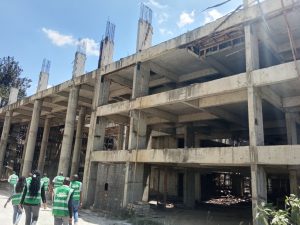
A 2025 ranking of Nairobi MPs by Tuko.co.ke listed Elachi among the city’s top 10 performers and cited student bursaries and classroom expansion among her key constituency interventions.
The increased NG-CDF allocation has provided additional room for such interventions.
For 2025/26, Dagoretti North’s Sh192.61 million allocation places it among the constituency funding bands nationally, although the figure represents an approved allocation rather than proof that the entire amount had been spent.
The 2026 exercise has also coincided with Elachi’s continued push for better targeting of public resources.
In Parliament in June, she argued that NG-CDF could be used to help vulnerable families access healthcare while calling for better capture of learners in the Kenya Education Management Information System so that government education funding follows the correct beneficiaries.
The bigger story in Dagoretti North, therefore, is not simply the amount of money allocated to bursaries but how the constituency is attempting to make access more structured and visible.
With five wards and a population of roughly half a million people, according to its 2025 annual report, the constituency faces a substantial demand for education support.
Elachi’s hands-on approach—launching applications, maintaining ward-based organisation and publicly championing bursaries—has helped put the issue firmly at the centre of constituency politics.
Still, the ultimate measure of transparency will go beyond public distribution exercises.
It will depend on whether eligibility criteria, beneficiary numbers, amounts awarded and expenditure records remain accessible and independently verifiable.
The available 2025 and 2026 records point to a constituency where education remains one of the principal beneficiaries of NG-CDF investment, with bursaries serving as a direct link between the development fund and families struggling with the cost of keeping children in school.