By Dennis Gichuiri
Kenya has launched a new national programme aimed at strengthening women’s participation in peace and security governance, with a special focus on Arid and Semi-Arid Lands (ASALs) and informal settlements where women are often excluded from decision-making despite bearing the greatest burden of conflict.
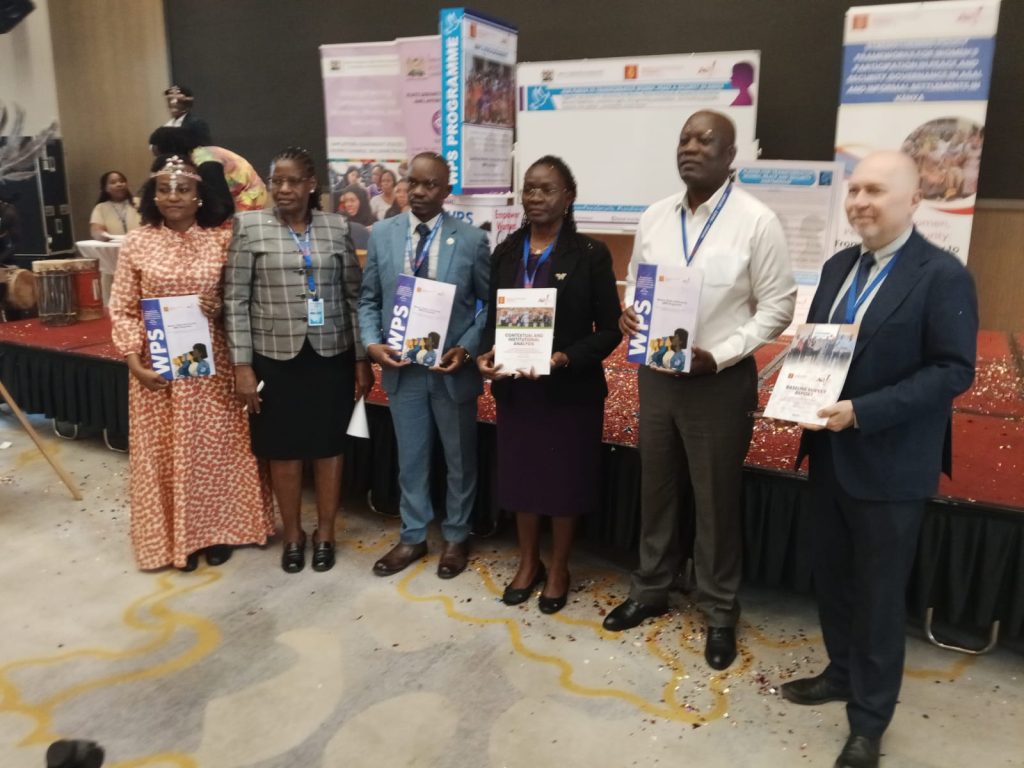
The Strengthening Policy Frameworks for Women’s Participation in Peace and Security Governance in ASALs and Informal Settlements in Kenya Programme (2026–2028) was officially launched at the Argyle Grand Hotel on Mombasa Road in Nairobi by Act Change Transform (Act!) with support from the Embassy of Denmark in Kenya and in partnership with the Government of Kenya through the State Department for Gender and Affirmative Action.
Speaking during the launch, Act Change Transform Executive Director Tom Were said the initiative builds on the organisation’s 25 years of experience in peacebuilding and conflict transformation across Kenya.
“Our organisation has been working on peacebuilding and conflict transformation across many forms of conflict, including resource-based conflicts, political conflicts, preventing and countering violent extremism, as well as community disputes,” Were said.
He noted that the programme emerged from years of discussions with development partners on the need to strengthen women’s inclusion in peace and security processes, arguing that women are disproportionately affected whenever conflicts erupt.
“Women receive those returning home from conflicts, care for those injured or traumatised, and shoulder much of the burden during and after violence. Yet their voices are often missing when decisions about peace and security are being made,” he said.
Were welcomed the support of the Danish Ministry of Foreign Affairs through the Embassy of Denmark in Kenya, saying the programme was developed in collaboration with the State Department for Gender and Affirmative Action and other stakeholders committed to advancing peace and security.
He described the initiative as timely, citing increasing cases of violence affecting women in different parts of the country.
“This is the moment to advocate for women to sit at the decision-making table, not only as members of their communities but also as individuals with a right to speak for themselves on matters affecting their peace and security,” he said.
The programme seeks to strengthen policy frameworks while enhancing the meaningful participation and leadership of women in peace and security governance. It aligns with international and national commitments, including United Nations Security Council Resolution 1325, Kenya’s National Action Plan on Women, Peace and Security (KNAP III), Denmark’s National Action Plan on Women, Peace and Security (2025–2029), the African Union Continental Results Framework, and several Sustainable Development Goals.
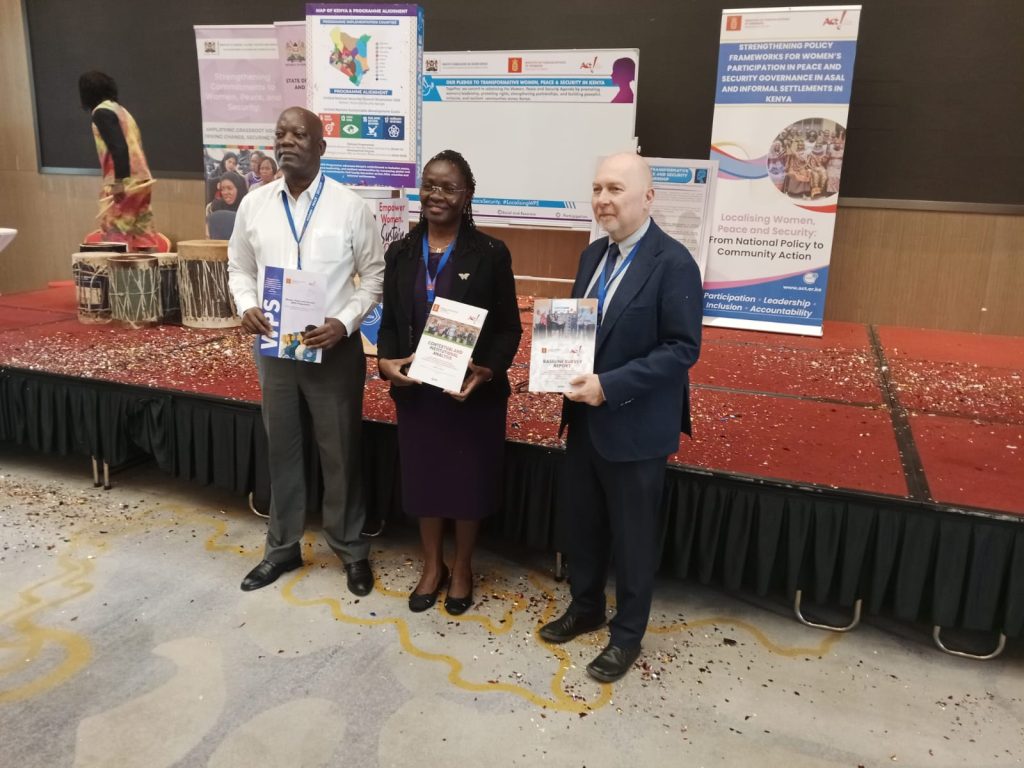
A key feature of the launch was the unveiling of a Pledge for Transformative Women, Peace and Security Partnership, committing stakeholders to move beyond symbolic participation towards measurable influence, localisation, protection and accountability for women in peacebuilding. The event also marked the dissemination of findings from a baseline survey and contextual analysis examining barriers to women’s participation and opportunities for strengthening policy implementation.
Addressing why the programme initially targets only ten counties, Mwere said limited resources required a phased approach.
“You can never have enough resources to cover all the counties at once,” he said. “Some of our ASAL communities are traditionally male-dominated, where women have limited opportunities to participate in discussions that directly affect them. We felt these were important places to begin increasing women’s engagement on peace and security issues.”
He, however, emphasised that the programme’s national advocacy component would benefit the entire country through policy dialogue and awareness campaigns.
“When we speak at the national level, we are communicating to the whole country. We are encouraging Kenya to give women a meaningful opportunity to contribute to community peace structures, shape policies, and help secure the future of our sisters, mothers, daughters and grandmothers,” he said.
The launch comes at a critical time as Kenya prepares for the 2027 General Election while also facing growing climate-related conflicts in ASAL regions and persistent violence against women in public and political spaces. Organisers said the programme aims to strengthen women’s leadership within Kenya’s peace and security architecture and build more inclusive systems for conflict prevention and resolution.