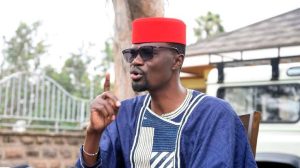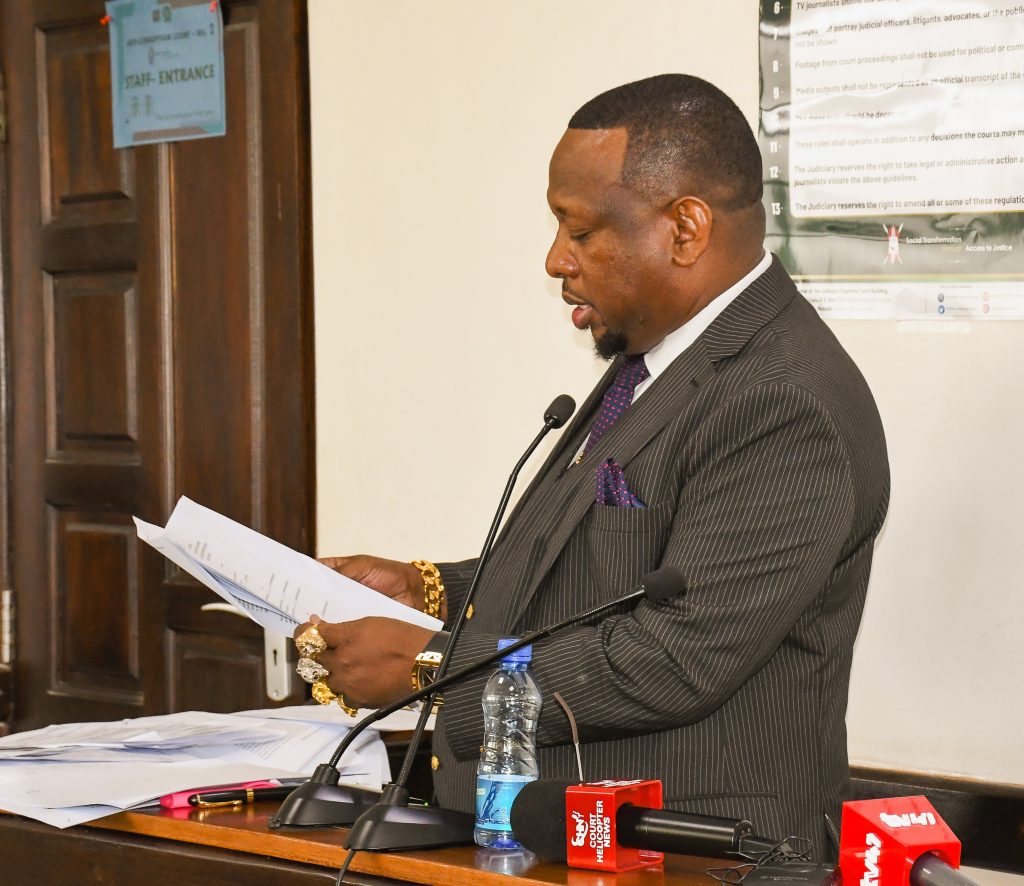
Former Mike Sonko has received another legal boost after the Court of Appeal of Kenya declined to grant the Assets Recovery Agency (ARA) a stay of execution in a case seeking to keep millions of shillings in his bank accounts frozen.
The latest decision has renewed debate over the long-running legal fight surrounding Sonko’s finances, with lawyer and former Raila Odinga aide Miguna Miguna among those who had accused him of money laundering.
In directions delivered by a three-judge bench comprising Justice Kathurima M’inoti, Justice Chacha Mwita, and Justice Bryam Ongaya, the appellate court ruled that it lacked jurisdiction to stay what it described as a “negative order” issued earlier by the High Court.
The court held that the High Court judgment merely dismissed ARA’s forfeiture suit and did not compel any party to take or refrain from any action, meaning there was nothing capable of being stayed under Rule 5(2)(b) of the Court of Appeal Rules.
As a result, the restrictions that had previously limited access to Sonko’s bank accounts remain lifted, at least temporarily, while the broader appeal process continues.
The Court of Appeal decision builds on a ruling delivered on October 1, 2025 by Justice Nixon Sifuna of the High Court of Kenya, who dismissed ARA’s attempt to forfeit the funds.
Justice Sifuna ruled that the agency had failed to provide credible evidence linking the funds to criminal activity.
In his judgment, the court criticized the investigations presented by ARA, citing selective investigations, lack of witness statements, and unverified documents relating to property transactions.
The judge concluded that the agency had failed to meet the burden of proof required in asset recovery cases.
A separate ruling by the Tax Appeals Tribunal also weakened attempts to restrict Sonko’s access to the funds.
In a decision delivered on November 14, 2025, tribunal member Dr. Rodney O. Oluoch held that tax claims cited by the Kenya Revenue Authority (KRA) were still under dispute.
The tribunal ruled that the alleged tax liabilities had not yet been determined, meaning the revenue authority could not enforce agency notices or recover the contested funds until the tax appeal is heard and concluded.
This reinforce Sonko’s Position following the Court of Appeal directions with proceedings unearthing the probability that authorities have not been able to prove allegations that his wealth was acquired illegally.
Miguna argued that the combined effect of the High Court ruling, the tribunal decision, and the Court of Appeal’s latest position shows that investigators failed to substantiate claims of money laundering and illicit enrichment.
According to him, the courts have repeatedly pointed to weaknesses in the investigations and evidence presented by state agencies.
He added that unless fresh and credible evidence is produced, continued attempts to freeze the funds risk being interpreted as harassment rather than lawful asset recovery.
Despite the latest development, the legal dispute is far from settled.
The Assets Recovery Agency still has a substantive appeal pending before the Court of Appeal challenging the High Court decision that dismissed its forfeiture case.
The appellate court also indicated that the only remaining issue from the withdrawn application relates to costs, with a ruling on that matter scheduled for March 13, 2026.
For now, however, the series of court decisions has provided Sonko with temporary relief and strengthened his argument that authorities have yet to demonstrate that the funds in question were obtained through criminal conduct.