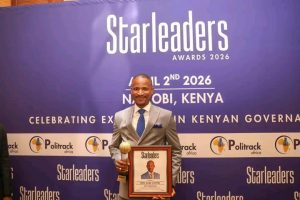
A fresh political storm is brewing within the Orange Democratic Movement (ODM) after businessman-turned-politician Johnson Oduk launched a forceful endorsement of Winnie Odinga, hailing her as the emerging face of a reinvigorated party and a key figure in its next chapter.
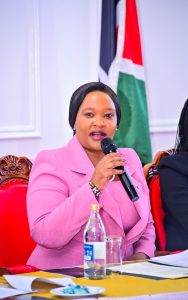
Speaking in the wake of her remarks at the party’s National Delegates Convention (NDC), Oduk did not hold back, describing Winnie as “a father’s hero” who has stepped forward at a defining moment to defend the party’s ideals and reconnect it with its grassroots base. His comments have since ignited debate across political circles, with analysts interpreting them as the clearest signal yet of an organized push to elevate Winnie into elective politics.
Oduk, widely regarded as a strategic mobilizer with deep grassroots influence, revealed that efforts to back Winnie for the Lang’ata parliamentary seat are already gaining traction on the ground. He framed the push not merely as a campaign, but as a “movement” aimed at restoring the party’s dominance in key urban constituencies while injecting new energy into its leadership.
“This is not about symbolism; it is about continuity and courage,” Oduk said, underscoring the need for a new generation to step forward and protect the legacy built by Raila Odinga. “The party must evolve, but it must also remain anchored in the values that defined its struggle.”
His remarks come at a time when ODM faces internal pressure to redefine its identity following years of political realignments and shifting alliances. Insiders say the endorsement of Winnie could mark the beginning of a broader succession conversation within the party, one that blends legacy politics with youthful appeal.
Observers note that Winnie, who has increasingly taken on a more visible political role, commands a unique position—bridging generational divides while carrying the symbolic weight of the Odinga name. Her recent assertiveness at the NDC appears to have solidified her standing among key party mobilizers, many of whom now see her as a unifying figure capable of rallying both loyalists and undecided supporters.
However, Oduk’s declaration is not without controversy. Critics argue that the move risks entrenching dynastic politics at a time when voters are demanding issue-based leadership. Others, however, counter that Winnie’s growing involvement demonstrates merit and readiness rather than entitlement.
Political analysts suggest that if the momentum continues, Lang’ata could quickly become one of the most closely watched battlegrounds in the next election cycle. The constituency, known for its diverse electorate and strategic importance, would serve as a critical testing ground for ODM’s ability to reinvent itself while maintaining its traditional support base.
For now, Oduk’s bold pronouncement has achieved one undeniable outcome: it has thrust Winnie Odinga firmly into the national spotlight, transforming quiet speculation into an open political conversation. Whether this “movement” matures into a formidable electoral force remains to be seen, but its early signals point to a shifting tide within ODM—one that could redefine the party’s future trajectory.