Kenya Ports Authority (KPA) and Kenya Railways Corporation (KRC) have agreed on a raft of immediate operational measures aimed at improving Standard Gauge Railway (SGR) container freight performance, accelerating cargo evacuation at the Port of Mombasa, and sustaining the ongoing empty container repatriation programme.
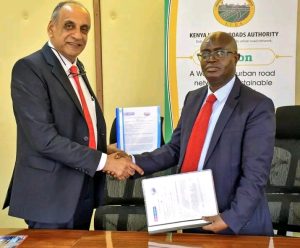
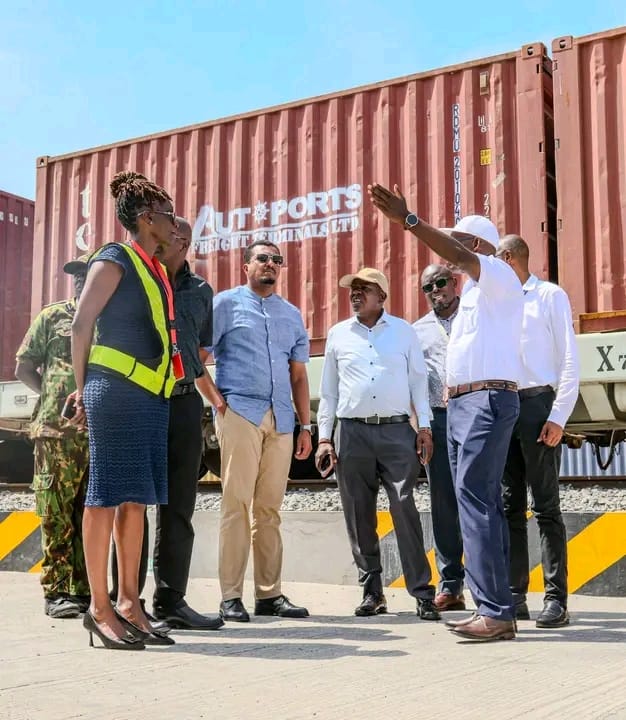
The resolutions were reached during a high-level joint operational meeting chaired by Transport Principal Secretary Mohamed Daghar (CBS), bringing together KRC Managing Director Philip Mainga (EBS) and KPA Managing Director Capt. William Ruto.
The meeting comes amid renewed pressure to stabilise the port–rail logistics chain, following persistent congestion and unpredictable cargo movement that has affected vessel turnaround times, train scheduling and overall port efficiency.
A key resolution from the meeting was the decision to introduce tighter control of merchant haulage nomination processes, a move expected to reduce operational loopholes that often delay cargo movement and complicate planning between the port and the rail operator.
Officials noted that a more disciplined nomination process would allow KPA and KRC to better plan cargo volumes, schedule trains more predictably, and ensure smoother container flow from the port to the inland depots.
The agencies also agreed to strengthen the handling and movement of empty containers, which have been identified as a major contributor to yard congestion at the port.
By improving empty-container management, KPA expects to ease pressure on stacking yards, free up space for imports and exports, and reduce bottlenecks that slow down loading and evacuation.
The improved programme is also expected to enhance the ongoing empty-container repatriation initiative, which has been critical in restoring order at the port and improving vessel turnaround.
Disciplined Train Scheduling and Yard Workflow.
In another key intervention, KPA and KRC agreed to implement more disciplined train scheduling and streamline yard workflows to reduce delays between ship discharge, container positioning, and rail loading.
The move is aimed at improving turnaround times for both trains and vessels, while restoring operational predictability across the logistics chain — a key demand from shipping lines, clearing agents and importers.
Going forward, the two agencies agreed to deepen port–rail integration through enhanced joint planning, improved data-sharing, and stronger cargo pre-advice systems.
Officials said the measures will reduce container dwell time at the port, stabilise end-to-end SGR operations, and eliminate the frequent disruptions that have undermined confidence in rail freight services.
In a firm message to the private sector, the meeting urged shipping lines, clearing agents and importers to align cargo planning and fully comply with the agreed operational measures.
The government warned that the success of the reforms will depend heavily on stakeholder discipline, particularly in ensuring cargo documentation, nominations and planning are done within the new framework.
The resolutions are expected to deliver a more reliable and predictable Madaraka Express freight service, improve cargo evacuation speed, and strengthen Kenya’s competitiveness as the logistics hub for East and Central Africa.
With the Port of Mombasa serving as the region’s key maritime gateway, officials said improved port–rail coordination will be critical in protecting the Northern Corridor’s efficiency and preventing cargo diversion to competing ports in the region