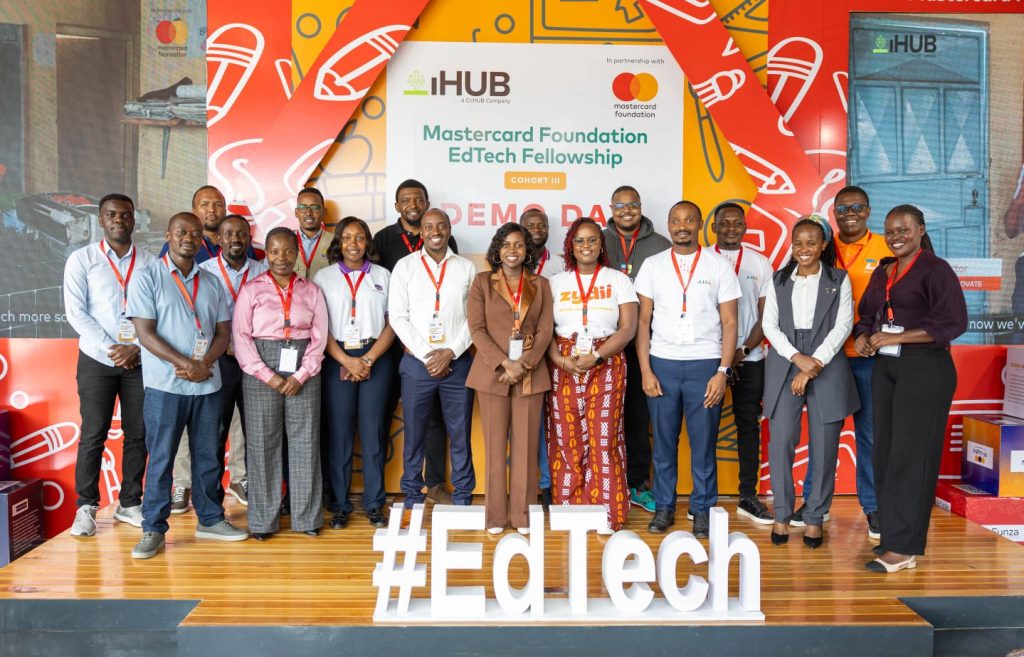
iHUB Kenya has successfully concluded the acceleration of Cohort 3 of the Mastercard Foundation EdTech Fellowship with a Demo Day held during EdTech Impact Week, marking a major milestone in strengthening the country’s education technology ecosystem.
The event showcased twelve EdTech startups—75 percent of them led by women founders—demonstrating Kenya’s growing commitment to gender equity and inclusive innovation in education.
Over the past eight months, the startups have implemented technology-driven solutions in schools and communities across Kenya. Their tools support personalized learning, improve teacher effectiveness, and expand access for learners in low-connectivity and under-resourced regions.
Inclusive Innovation at the Center
“We’re incredibly proud to witness how this Demo Day brings inclusive innovation to life,” said Nissi Madu, Managing Partner at iHUB.
“At the heart of the Mastercard Foundation EdTech Fellowship is a commitment to ensure that every learner — especially those in underserved communities — can access technology-enabled learning that opens doors to opportunity. This cohort has worked tirelessly to refine their solutions and ensure their products meet real learning needs. As we move into the post-program phase, we look forward to supporting them as they scale their impact to millions of learners across Kenya.”
Growing National Impact
Since its inception, the Mastercard Foundation EdTech Fellowship, implemented by iHUB, has supported 36 EdTech companies that have collectively:
Reached over 580,000 learners,
Empowered more than 8,800 educators, and
Engaged 2,000 schools across Kenya.
The startups have also provided access to 2,000 learners with hearing and visual disabilities, demonstrating how inclusive innovation can bridge long-standing gaps in the education system.
Startups Voice the Impact
Abdinoor Alimahdi, Co-founder and CEO of M-Lugha, said the Fellowship strengthened their ability to support learners in marginalized communities.
“The mentorship helped us refine our product’s accessibility features and deepen our understanding of early learners’ linguistic needs. As a result, more children can now access mother-tongue learning content that reflects their realities and improves comprehension.”
Rhoda Kingori, Co-founder and COO of Zydii, noted that the Fellowship transformed how their platform serves learners:
“Through product and go-to-market advisory, we enhanced our mobile-first training on WhatsApp, making it easier for young people with limited connectivity to access practical, localized skills content. We are now reaching more learners with relevant, affordable training, including those with disabilities.”
A Cohort Driving the Future of EdTech
The 2025 cohort—AHA Innovate, Cloud School System, Digifunzi, Digiskool, Dignitas, Elimu Shop, iFunza, Infoney Solutions, M-Lugha, Nyansapo AI, Verb Education, and Zydii—represents the next frontier of Kenyan EdTech innovation. Their solutions include:
AI-powered adaptive learning platforms,
Solar-powered offline classrooms, and
Tools designed for low-connectivity and marginalized regions.
Each innovation tackles a core barrier to equitable education access.
Supporting Alignment With Kenya’s Curriculum
To strengthen the integration of EdTech solutions into national systems, iHUB has developed the EdTech Toolkit for KICD Alignment, a practical guide helping startups navigate the Kenya Institute of Curriculum Development approval process. This ensures their solutions align with national standards and deliver scalable, long-term impact.
The Road Ahead
Over the next year, iHUB will continue supporting Cohort 3 through post-program advisory, mentorship, and access to capital. This ongoing collaboration with the Mastercard Foundation reaffirms a shared vision: making learning across Africa inclusive, technology-driven, and future-ready.
The Mastercard Foundation EdTech Fellowship aims to strengthen Africa’s EdTech ecosystem by supporting innovators delivering affordable, inclusive learning solutions, especially for young people, learners with disabilities, and communities affected by displacement and marginalization. The Fellowship is currently active in 12 African countries, including Kenya.