Fresh allegations of irregular voter transfers out of Nairobi County have sparked serious concerns over the integrity of Kenya’s electoral process.
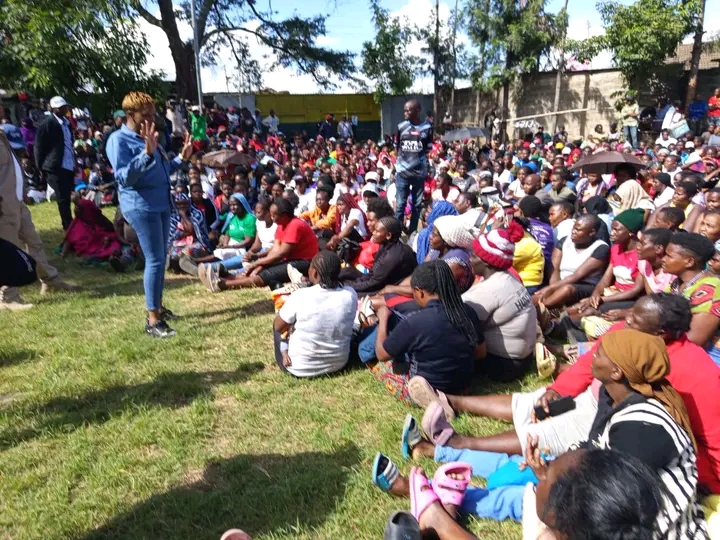
Nairobi South B MCA and Deputy Minority Leader in the County Assembly, Waithera Chege, has sounded the alarm, warning that the issue could escalate into a full-blown democratic crisis if left unaddressed.
According to reports, several voters in Nairobi have discovered that their registration details have been moved to polling stations outside the capital without their knowledge or consent.
The most affected areas include Embakasi Central and Embakasi West constituencies, with some residents reportedly transferred as far as Garissa County.
At the heart of Chege’s warning is a fundamental threat to the credibility of the voters’ register.
The Independent Electoral and Boundaries Commission (IEBC) has consistently acknowledged that a trustworthy and accurate register forms the foundation of free and fair elections.
Stakeholders have warned that unexplained or unauthorized voter transfers undermine key principles of the electoral process.
These irregularities erode transparency, as citizens lose confidence in the system when their details are altered without notification. They weaken accountability, raising fears that political outcomes could be manipulated.
They also distort representation, as constituencies may no longer accurately reflect their actual resident populations. If left unchecked, such transfers could enable a form of soft gerrymandering, where voters are artificially redistributed to influence electoral results.
Nairobi is not just another county — it is Kenya’s political nerve centre. The capital hosts a highly diverse and politically active population, often mirrors national voting trends, and carries immense symbolic and strategic weight.
Any irregularities in Nairobi therefore have far-reaching national implications, potentially affecting presidential, gubernatorial, parliamentary, and county outcomes.
The timing of these concerns is particularly worrying. They have emerged during the ongoing nationwide Enhanced Continuous Voter Registration (ECVR) exercise, which aims to register millions of new voters ahead of the 2027 general elections.
While the process is intended to enhance accessibility through new registrations, transfers, and data updates, it also creates opportunities for errors or abuse if proper oversight is lacking.
Waithera Chege’s concerns should not be dismissed as mere political rhetoric.
They touch on core governance and constitutional issues that require urgent intervention by the IEBC. Unauthorized transfers risk disenfranchising voters by forcing them to travel long distances or preventing them from voting altogether on election day.
If coordinated, they could dilute voting strength in certain areas while inflating numbers in politically favourable zones.
Kenya’s electoral history is already marred by disputes and contested results. Any perception of manipulation in the voters’ register could trigger renewed political tensions, legal battles, and even public unrest. Restoring and maintaining public confidence must therefore be a top priority.
There is a strong case for the IEBC to treat Nairobi as a special voting block deserving enhanced safeguards.
This could include stricter audit systems for all transfers involving Nairobi voters, real-time SMS or email verification alerts whenever a voter’s details are changed, rigorous approval protocols for inter-county transfers, and public transparency dashboards displaying transfer trends and statistics.
The warning issued by MCA Waithera Chege is more than a local complaint — it is a national red flag. If the Independent Electoral and Boundaries Commission fails to act decisively and transparently, the credibility of the 2027 elections could be severely compromised, voter confidence could erode further, and Kenya risks sliding back into cycles of contested electoral legitimacy.
In any democracy, the voters’ register is sacred. Once its integrity is called into question, the entire electoral system stands on shaky ground.
The IEBC will be forced to investigate these allegations promptly, implement corrective measures, and strengthen safeguards to protect the democratic process.