By Francis Inguzi
As heavy rains continue to pound several parts of the country, the government is shifting focus toward household-level water harvesting and improved urban drainage systems as a key response to recurring floods.
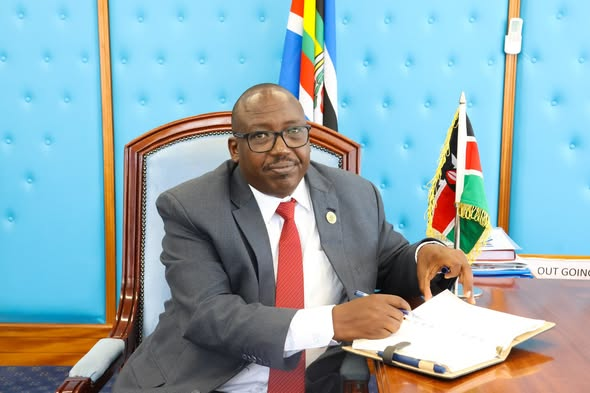
During a high-level meeting at Maji House in Nairobi, Water, Sanitation and Irrigation Cabinet Secretary Eng. Eric Mugaa and National Water Harvesting and Storage Authority (NWHSA) Acting CEO Eng. Julius Mugun outlined a strategy that places citizens at the center of flood mitigation efforts.
While large-scale infrastructure such as dams and dykes remains a priority, officials now say empowering households to harvest rainwater could significantly ease pressure on overwhelmed drainage systems, particularly in urban areas.
“We are encouraging simple, practical solutions at the household level to reduce surface runoff, which is a major contributor to urban flooding,” said Mugun, noting that many drainage systems are unable to cope with intense rainfall.
The approach marks a shift from relying solely on government-led mega projects to a more inclusive model that combines community action with national infrastructure development.
CS Mugaa emphasized that the ongoing rains should be viewed not just as a crisis, but as an opportunity to better utilize water resources. He noted that investments are being directed toward systems that can both store excess water and protect communities from flood damage.
Experts warn that rapid urbanization, coupled with poor drainage planning, has worsened flooding in towns and cities, making localized solutions increasingly necessary.
The government is also fast-tracking the desilting of existing dams to increase their storage capacity and improve their ability to control floodwaters.
With climate change driving more extreme weather patterns, officials say a multi-layered approach—combining infrastructure, maintenance, and community participation—will be critical in building long-term resilience.
The renewed strategy comes as flooding continues to displace families and damage property in low-lying and informal settlements, underscoring the urgency of sustainable and inclusive water management solutions.