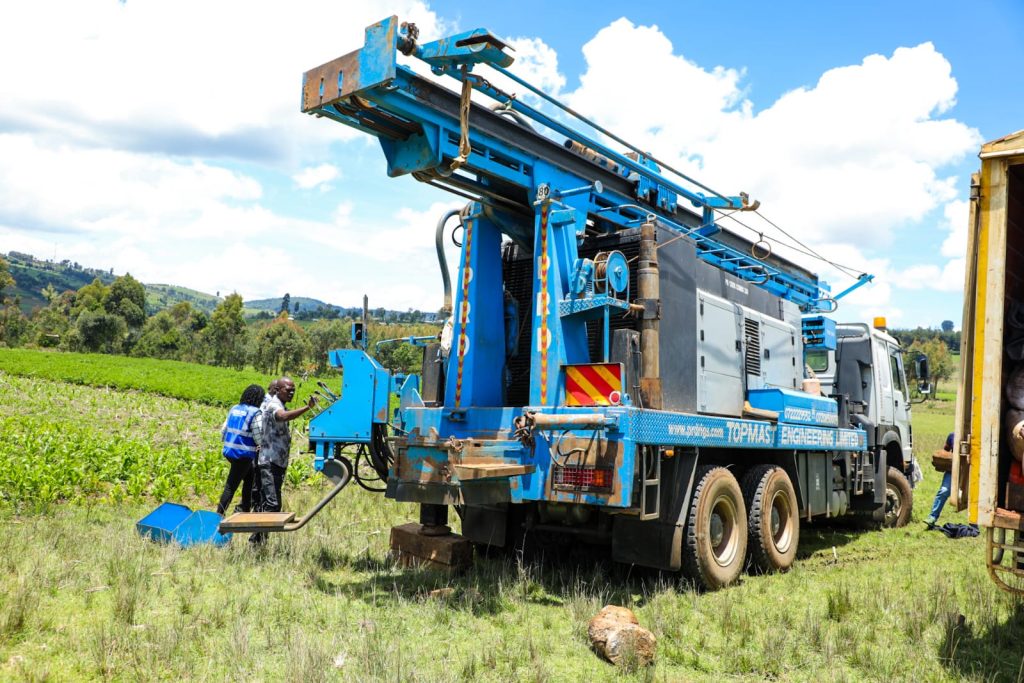
Residents of Kalukyat village in Mau-Narok Ward, Njoro Constituency, Nakuru County are set to benefit from improved access to clean water following the launch of a borehole project by the National Water Harvesting and Storage Authority (NWHSA), in partnership with the office of Njoro MP Charity Kathambi.
The initiative, unveiled during a ceremony attended by government officials, local leaders and residents, marks a significant milestone in addressing decades of water scarcity that has plagued the area, affecting households, schools and economic activities.
Speaking during the launch, NWHSA Chief Executive Officer Julius Mugun said the project is part of the government’s broader “Maji Mashinani” programme, a flagship initiative aimed at ensuring water access at the grassroots level.
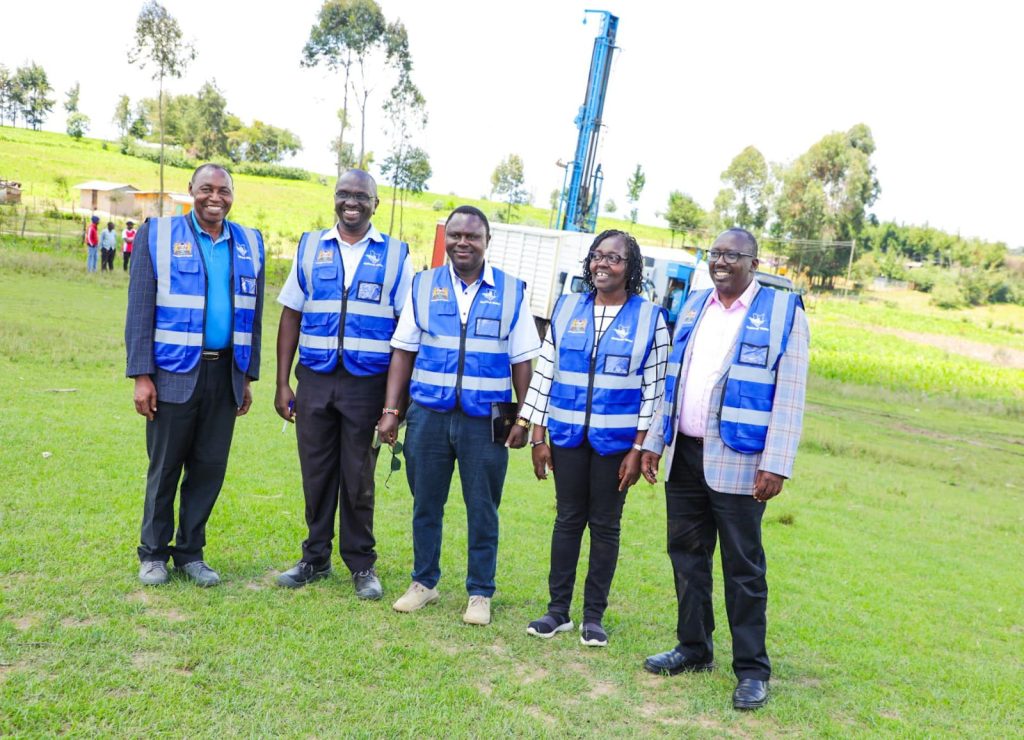
“We are here in Kalukyat to implement the government’s commitment, under President William Ruto, to ensure that every Kenyan can access water close to their homes,” said Mugun. “This borehole is just the beginning. We will harvest groundwater, store it in tanks, and roll out a structured distribution system to reach households efficiently.”
Mugun assured residents that the project would be completed within approximately 60 days, adding that it would significantly ease the burden on families who have long struggled to access safe and reliable water sources.
“Our children will no longer spend hours walking long distances in search of water. They will now have more time to focus on their education and other productive activities,” he said.
He explained that the project will involve pumping groundwater into storage tanks before distributing it to the community through a network designed to ensure accessibility, including the establishment of communal water points.
“We are also exploring the possibility of placing storage tanks on elevated ground to improve water flow and distribution efficiency across the village,” Mugun added.
The CEO noted that the borehole is expected to initially serve approximately 300 residents, including their households, livestock, and small-scale farming needs, with plans to expand coverage as the system develops.
Mugun further emphasized the importance of community participation in sustaining the project, urging residents to take ownership of the resource.
“We urge the community to conserve water and protect the environment by planting trees to sustain the water table. It is also critical to establish a local management committee to oversee maintenance, especially for the pump and related infrastructure,” he said.
NWHSA Board representative Duncan Gituma said the project aligns with the government’s broader agenda of ensuring universal access to clean and safe water, particularly in historically marginalized areas.
“This initiative reflects a deliberate effort by the government to bridge long-standing gaps in water access. Communities like Kalukyat have been underserved for years, and this project signals a turning point,” said Gituma.
John Njihia, representing the office of Njoro MP Charity Kathambi, lauded the government for prioritizing the needs of Kalukyat residents, noting that the area had long been overlooked in development planning.
“This is a major milestone for our people who have struggled for decades without reliable water supply,” Njihia said. “The use of solar power to pump and distribute water will significantly reduce operational costs and make the project sustainable in the long term.”
He also called on implementing agencies to consider enhancing the infrastructure to maximize the project’s impact.
“We are appealing to the relevant authorities to install elevated tanks to improve pressure and ensure efficient distribution to all households,” he added.
Njihia indicated that once fully operational and expanded, the project could potentially serve over 5,000 residents in the wider area.
Local residents welcomed the project with optimism, sharing personal experiences that highlight the severity of water scarcity in the region.
Samuel Kimtai Langat said the community has endured water shortages for more than three decades since settling in the area.
“We have lived without reliable water for over 30 years. This project gives us hope for a better future,” he said.
Wesly Ng’etich recounted the daily struggles residents faced in accessing water, often traveling long distances under harsh conditions.
“We used to walk up to 20 kilometres every day to fetch water, sometimes relying on donkeys to carry it back home. It has been extremely difficult for families here,” he said.
For many residents, the lack of clean water has also posed serious health risks. Mercy Kimosop said families have been forced to rely on unsafe sources such as River Njoro.
“We have been drinking water from River Njoro, which is not safe for human consumption. Our children have suffered from diseases because of this,” she said. “We are grateful for this project and ask the government to establish more water kiosks within reachable distances to serve everyone.”
She added that additional water points within a reasonable radius would help reduce congestion and ensure equitable access for all households.
Residents also used the occasion to voice frustration over years of neglect by previous administrations, urging leaders to maintain momentum in delivering development projects to underserved communities.
The Kalukyat borehole project is part of a broader nationwide effort by the government to expand access to clean and safe water, with a focus on rural and arid areas. Through initiatives such as Maji Mashinani, authorities aim to reduce the burden of water scarcity, improve public health, and support livelihoods across the country.
As drilling begins and infrastructure takes shape, the people of Kalukyat are looking ahead with renewed hope that a long-standing challenge may finally be coming to an end.