By David Ndolo
Journalists covering anti-doping must report with scientific accuracy and legal caution to protect athletes’ reputations and safeguard clean sport, experts said during the sixth Anti-Doping Media Workshop hosted by the Anti-Doping Agency of Kenya (ADAK).
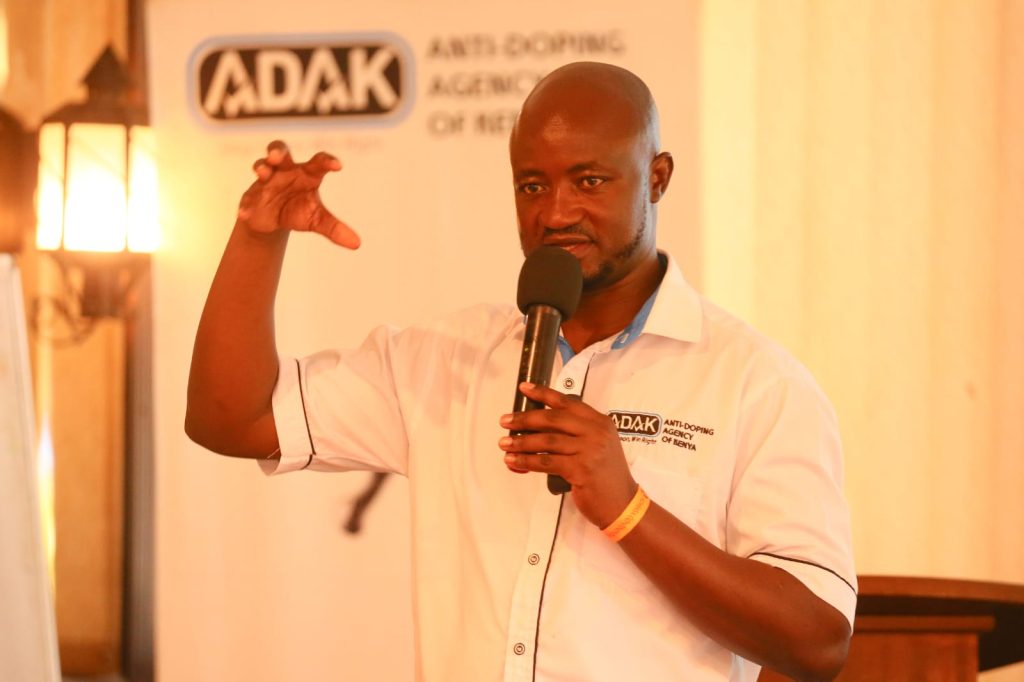
Addressing members of the Sports Journalists Association of Kenya (SJAK), Dr Martin Yauma, ADAK’s Acting Director of Standards & Compliance, underscored the weight of responsibility carried by the media in doping-related reporting.
“Reporting on anti-doping is scientifically complex, legally sensitive and reputationally explosive. One misstep can have far-reaching consequences,” Yauma said. “As media professionals, you are not just reporters of events — you are shapers of narratives and custodians of public trust.”
He noted that anti-doping efforts in Kenya are anchored on the global framework established by the World Anti-Doping Agency (WADA) under the World Anti-Doping Code. However, he emphasised that the effectiveness of this system depends heavily on accurate public communication.
Journalists, he said, play a pivotal role in shaping understanding around doping violations and sanctions, Therapeutic Use Exemptions (TUEs), testing procedures and results management.
The two-day workshop in Mombasa is designed to demystify anti-doping regulations, clarify legal frameworks and strengthen collaboration between ADAK and the media fraternity. Organisers say the goal is to enhance factual, ethical and balanced reporting while reducing legal risks for media houses.
“As Kenya continues to shine on the global sporting stage, protecting the credibility of our athletes and our nation’s reputation is not optional — it is imperative,” Yauma added.
SJAK President James Waindi echoed the call, noting that athletics remains a pillar of national pride and a major economic driver. He challenged journalists to familiarise themselves with the 2026 WADA Prohibited List and anti-doping terminology to ensure precise coverage of violations.
“This workshop is not just professional development; it is a critical intervention for the country’s sporting future,” Waindi said.
ADAK and SJAK have partnered for six consecutive seasons to build capacity among sports journalists, reflecting a shared commitment to transparency, accountability and clean competition.
As anti-doping regulations evolve globally, stakeholders say sustained media training will be essential in safeguarding integrity within Kenyan sport.