As the world marks World AIDS Day, the Civil Society Reference Group (CSRG) is asking the Government to increase budgetary allocations to the health sector to bridge the funding gaps left by declining donor support.
Nairobi County has recorded the highest number of new HIV infections. Data from the National Syndemic Disease Control Council (NSDCC) shows that in the last year, new infections have risen by 19 per cent, up from 16,752 to 19,991.
Ten (10) counties, Nairobi, Migori, Kisumu, Homa Bay, Busia, Siaya, Kakamega, Nakuru, Mombasa, and Bungoma, accounted for 60% of all new HIV infections in 2024. Nairobi County led with 3045 new infections, followed by Migori (1572) and Kisumu (1341).
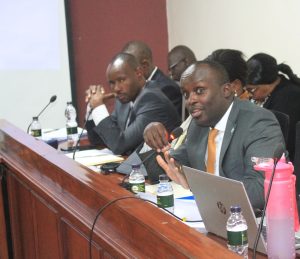
Speaking to the media, David Caleb Otieno of CSRG expressed concern over the reduced government effort in cushioning the country from shrinking donor support, particularly from key partners such as USAID.
“The increments in the infections is a result of reduced allocations and of course it is not only US but also France, Germany and UK that have announced a sharp reduction to official development assistance coming to health and the recent report from OECD actually stated that in the 2026 we are expecting around 41% cuts to overseas development assistance, I mean official development assistance coming to health care and the biggest casualty is HIV which is having a reduction of 35%. So I think one of the issues that we need to look at is government should now start planning or allocating resource taxpayers money to the health care to meet the gap because the government said that they are going to to meet the gap of the deficit but one issue that is emerging is that critical sectors like health care never budgeted for with the taxpayers money I think that’s one of the problems,’’ Otieno said.
Further, the survey shows that HIV related deaths increased by 0.05 in 2024, as 21,007 deaths were recorded. This was a rise from 18,473 in 2023.
NSDCC data also shows that in 2025, Kenya recorded a 52% decrease in new HIV infections. As of 2024, 1,326,336 Kenyans were living with HIV, among them 62,798 children.
Otieno emphasized that the Government must take full responsibility for addressing the HIV burden to curb rising infections and safeguard public health.