LG Showcases AI Technology Driving the Next Generation of Smart Appliances
Artificial intelligence is changing how home appliances are manufactured, operated and connected, with LG Electronics showcasing how the technology is shaping the future of household products through its advanced manufacturing facility in South Korea.
At the centre of the company’s innovation strategy is LG Smart Park in Changwon, where artificial intelligence, digital twin technology, machine learning and autonomous robots are integrated into production processes.
The facility, recognised as a Lighthouse Factory by the World Economic Forum in 2022, demonstrates how intelligent manufacturing can improve production efficiency, enhance quality control and reduce operational costs.
Through digital twin technology, LG Smart Park monitors and simulates manufacturing processes in real time, analysing production data every 30 seconds to identify potential disruptions and alert workers to issues that could arise within the next 10 minutes.
The predictive system allows production teams to address potential problems before they affect operations.
LG reports that the adoption of digital twin technology helped reduce defective-product returns by 70 per cent between 2020 and 2021.
The factory also uses an automated three-dimensional logistics system to manage the movement and storage of materials. According to the company, the technology has reduced warehouse space requirements by 30 per cent and cut hourly material transportation time by 25 per cent.
These developments illustrate how manufacturers are increasingly relying on data, automation and robotics to improve productivity while maintaining consistent product quality.
From smart factories to intelligent homes
LG’s focus on artificial intelligence extends beyond manufacturing to the appliances consumers use in their homes.
At LG ThinQ Real in Seoul, the company demonstrates its AI Home concept, which connects household appliances, smart devices and contextual intelligence to create living environments that respond to users’ routines and preferences.
The ecosystem is powered by ThinQ ON, LG’s AI Home hub, which connects and coordinates compatible LG appliances and third-party Internet of Things devices.
This allows different household products to work together, reducing the need for users to operate each appliance independently.
For instance, a request for a recipe can trigger step-by-step cooking guidance while coordinating kitchen ventilation. The system’s Away Mode can also switch off lights, adjust appliances to energy-saving settings and activate a robot vacuum cleaner when occupants leave home.
The concept supports LG’s Zero Labor Home vision, which seeks to reduce the time and effort spent on household tasks through intelligent automation.
Rather than functioning as standalone products, appliances are increasingly being developed as part of connected systems that can coordinate different household activities.
Building on decades of engineering experience
Despite the growing role of artificial intelligence, LG’s latest innovations build on decades of engineering and product development.
At the LG Heritage Lounge in Changwon, the company showcases its evolution since its establishment as Goldstar in 1958, highlighting developments in washing machines, refrigerators and air conditioning systems.
Among the technologies featured are the Inverter Direct Drive motor, Inverter Linear Compressor and Dual Inverter Compressor, which have contributed to improvements in appliance performance, reliability and energy efficiency.
LG is now combining these established technologies with AI-powered controls that allow appliances to make adjustments based on operating conditions and consumer usage patterns.
The integration of hardware engineering and intelligent software is expected to play an increasingly important role in the development of future household appliances.
Innovation across the consumer experience
LG’s innovation strategy also extends to premium residential solutions and retail experiences.
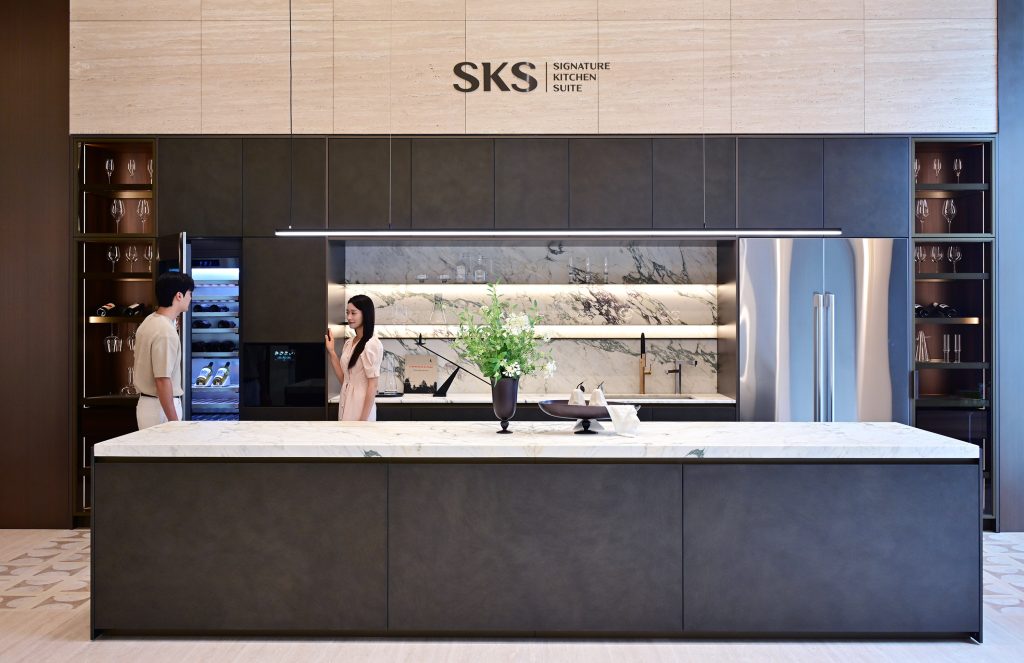
At SKS Seoul, the company’s ultra-premium built-in appliance showroom, visitors can explore integrated kitchen technologies that combine advanced appliances with luxury furnishings and professional design consultations.
Meanwhile, the LG Flagship D5 in Gangnam demonstrates how the company is using immersive product displays, digital art, interactive demonstrations and lifestyle settings to transform the traditional retail experience.
The developments reflect a broader shift in the home appliance industry, where competition is increasingly shaped by the integration of manufacturing capabilities, hardware, software, artificial intelligence and connected services.
LG Electronics East Africa President Donghun Lee said investment in intelligent manufacturing provides the foundation for developing products that respond to changing consumer expectations.
“For LG, investment in intelligent manufacturing provides a foundation for developing products that are more efficient, responsive and aligned with changing consumer expectations,” Lee said.
He added that the relationship between manufacturing technology and household innovation was becoming increasingly important as advances in industrial automation influence the development of smarter consumer products.
As artificial intelligence becomes more embedded in everyday technology, LG is positioning connected appliances and intelligent manufacturing as key pillars of its strategy to shape the next generation of home living.