By Dennis Gichuiri
PS says Shovel-ready industrial parks, special economic zones and major infrastructure projects will help create jobs and unlock investment opportunities around the Lamu refinery.
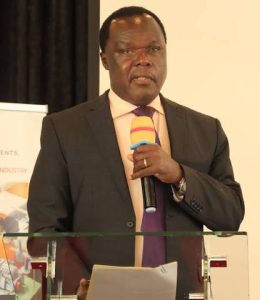
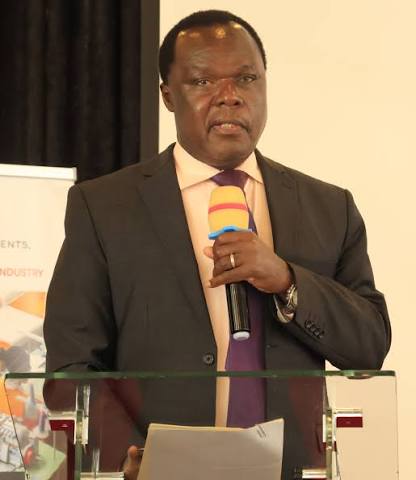
Principal Secretary for Industry Juma Mukhwana has described the proposed Dangote refinery project in Lamu as a potential game changer for Kenya’s industrialisation agenda, saying the investment could trigger the growth of manufacturing industries and create jobs for young people.
Speaking during an International Policy Group media breakfast meeting on Lamu and the Dangote refinery, Mukhwana said the project presented a major opportunity for Kenya and the wider African continent to turn their economic potential into tangible industrial growth.
He noted that construction had started following the project’s launch a few weeks earlier, expressing optimism that the investment would help reshape Kenya’s industrial landscape.
“This is a huge investment for Kenya and also a big investment for Africa,” Mukhwana said, adding that the project would open new opportunities for manufacturing and industrialisation.
The PS said Kenya had struggled to fully exploit regional markets despite belonging to economic blocs such as the East African Community, COMESA and the African Continental Free Trade Area.
According to Mukhwana, limited investment in large-scale manufacturing projects has continued to constrain trade across the region.
He argued that Kenya needed major industrial investments capable of producing goods for regional markets rather than relying heavily on imported products.
For the government, he said, the refinery represented one of the biggest foreign direct investments the country had witnessed since independence.
Government Eyes Industrial Growth Along the Coast
Mukhwana said the refinery should not be viewed as an isolated project but as part of a wider industrial ecosystem taking shape across the coastal region and other parts of the country.
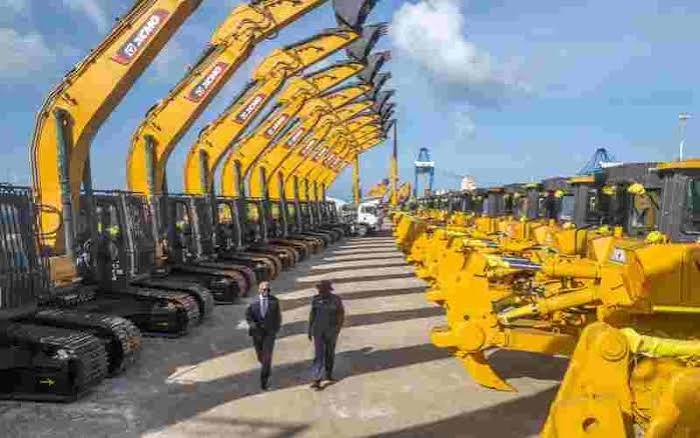
He pointed to commercial agriculture in the Galana-Kulalu area, where he said two sugar factories were being established, alongside plans for industrial parks and special economic zones.
The PS also highlighted the Dongo Kundu Special Economic Zone in Mombasa and the DP World industrial park, which he said formed part of a broader push to attract investment and expand manufacturing.
He cited the Vipingo industrial park, being developed on approximately 2,000 acres, as another project expected to contribute to the region’s industrial growth.
Further inland, Mukhwana pointed to steel production and iron ore processing in Taita Taveta as well as plans for industrial parks in Nakuru and Kisumu.
He said the government wanted major roads and railway infrastructure to support manufacturing activities instead of serving mainly as transport routes for imported goods.
The strategy, he explained, was to create industrial centres where locally manufactured products could move efficiently to markets while reducing reliance on imported goods.
Mukhwana also revealed that the government was exploring the possibility of designating the Turkana oil ecosystem as a special economic zone.
In Magadi, he said, discussions were ongoing on how to expand the value chain around soda ash production to include chemicals, detergents and other related products.
He argued that such investments would help Kenya move beyond the extraction of raw materials to the production of finished goods that generate more economic value and employment.
PS Defends Need to Balance Environmental Concerns and Development
The PS acknowledged concerns surrounding the refinery and other large-scale industrial projects, including environmental protection and public participation.
However, he argued that Kenya needed to balance those concerns with its economic development priorities and the need to compete for investment in a rapidly changing region.
Mukhwana said Kenya’s constitutional provisions on public participation were important but noted that lengthy decision-making processes could affect the country’s ability to move at the same pace as its regional competitors.
Using the coal industry as an example, he questioned why Kenyan industries continued importing coal from countries such as Tanzania, Mozambique and South Africa while domestic coal deposits remained largely untapped.
He said Kenyan steel and cement manufacturers imported coal worth approximately Sh30 billion annually, raising questions about the country’s approach to exploiting local resources.
“Some of these issues are important. But we must also love our country,” he said.
The PS maintained that environmental concerns should be addressed while also examining how local resources could support industrial growth and reduce dependence on imports.
He stressed that his remarks on carbon emissions reflected his personal views and should not be interpreted as official government policy.
Kenya Must Attract More Investors
Mukhwana said Kenya’s economic progress had been driven largely by the entrepreneurial spirit of its people despite the country’s limited arable land and natural resources.
He observed that only about 15 per cent of Kenya’s land was arable, arguing that the country’s economic performance demonstrated the importance of innovation, investment and risk-taking.
He urged investors to explore opportunities emerging around the refinery, industrial parks, transport infrastructure and other planned developments.
According to the PS, the government’s investments in roads and other infrastructure were expected to support economic activity along the coast and towards neighbouring countries, including Ethiopia.
He said the success of the industrialisation agenda would depend on attracting businesses that could establish manufacturing facilities, develop local supply chains and create employment.
Mukhwana acknowledged the risks associated with the refinery project but expressed confidence that they could be managed through engagement among the government, investors, policy experts and other stakeholders.
He invited the private sector to look beyond the refinery itself and consider investments in supporting industries that could benefit from the project.
The PS said the ultimate goal was to turn large infrastructure investments into sustainable economic opportunities, particularly for young people seeking employment.
The meeting brought together policy experts and industry stakeholders to examine the opportunities and concerns surrounding the Lamu refinery project and its potential implications for Kenya and the region.