Nairobi City Water and Sewerage Company is under pressure to settle billions of shillings in unpaid pension obligations after the Nairobi County Assembly Water Committee raised concerns over the impact of the debt on current and retired employees.
The committee heard that the company owes a pension scheme millions of shillings in contributions deducted from employees’ salaries but allegedly not remitted, leaving some retirees with inadequate benefits.
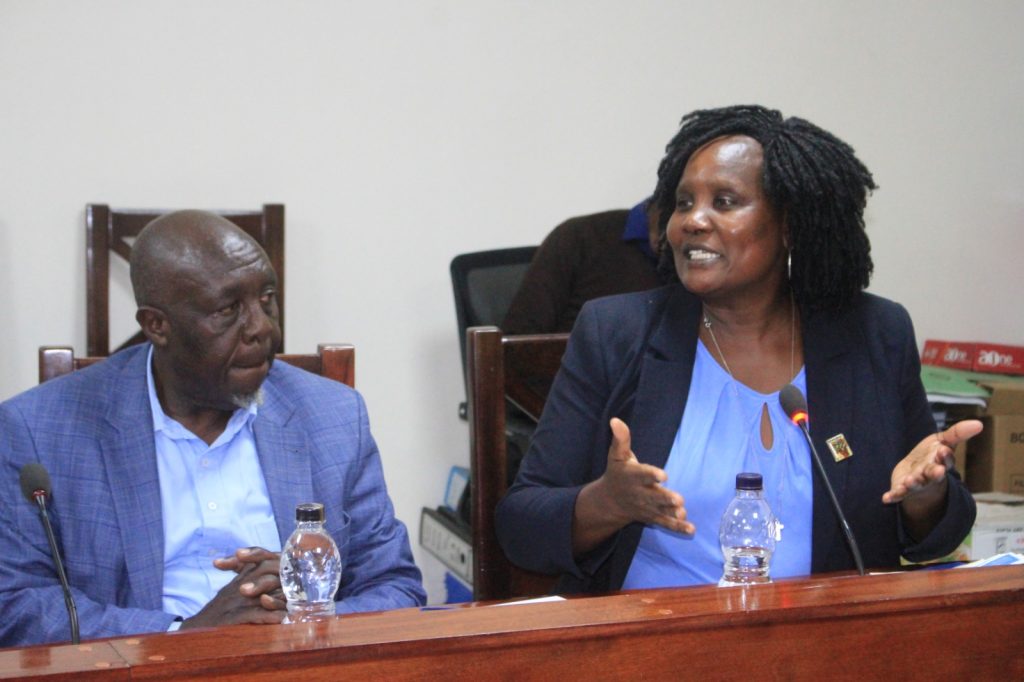
Water Services Workers Union National General Secretary Matilda Kimeto told the committee that some of the money involved represented employees’ salaries that had been deducted for pension contributions.
“This is literally employees’ salaries; they deducted the money and never sent it to the pension houses. People retired with peanuts. Now they are dying,” Kimeto said.
The matter came up during a sitting of the Nairobi County Assembly Water Committee on Wednesday, September 2, chaired by Highrise Ward MCA Kennedy Oyugi. Nairobi City Water and Sewerage Company Managing Director Martin Nangole was among those who appeared before the committee.
Dispute over exact pension debt
A key issue before the committee was the amount actually owed by Nairobi Water.
Company officials said their reconciliation showed that the outstanding amount stood at about Ksh2.6 billion as of June 2026.
However, members also referred to correspondence from the pension side that placed the amount at about Ksh4.3 billion, creating a dispute over the actual liability.
Nairobi Water maintained that the two sides had previously met and agreed on the Ksh2.6 billion figure. The company said a reconciliation report had also been signed by the parties involved.
The union’s position, however, raised questions over whether the figures had been conclusively reconciled.
The committee was told that representatives of the union had attended the meeting where the reconciliation was discussed.
Committee members declined to settle the disputed figures during Wednesday’s sitting and instead agreed that all the affected parties should meet and resolve the matter.
The meeting is scheduled for Friday, September 4.
“We have all agreed that we are going to have a meeting where all stakeholders will be there. For now, your position, we do not agree on the figures,” the committee heard.
Nairobi Water proposes five-year repayment plan
Nairobi Water told the committee that it wants to clear the outstanding pension obligation over 60 months, equivalent to five years.
The company said it was already making substantial monthly payments towards pension obligations and the old debt.
Officials told the committee that the company paid about Ksh66 million in both July and August, with part of the money going towards current monthly contributions and the remainder towards the old debt.
In July, about Ksh24 million was allocated to monthly contributions while approximately Ksh41 million went towards the old debt.
The company argued that its improved payments meant it could settle the debt through its revenues instead of taking a commercial loan.
Nairobi Water said it had previously been asked to remit about Ksh38 million every month but had demonstrated that it could make payments of around Ksh66 million monthly.
The company said it could therefore continue with the arrangement and clear the debt without borrowing.
“If we are able to continue doing this on a daily basis, there is no need for us taking that loan. We’ll be able to pay this amount and we’ll be able to pay the retirees their dues,” the company representative said.
MCAs question rising interest
The committee also questioned how the pension obligation had grown from an original principal amount of about Ksh900 million to more than Ksh2.7 billion.
Members wanted to know whether the accumulated interest could be negotiated down to reduce the amount the company ultimately pays.
The committee was told that the interest applied to unpaid pension obligations was 3 per cent per month compounded, which officials said had contributed significantly to the growth of the debt.
The officials further told the committee that Nairobi Water had proposed in 2022 that it could take a commercial loan at about 13.5 per cent per year on a reducing balance to clear the pension obligation rather than continue accumulating the higher compounded charges.
The proposal to use company revenues instead of a commercial loan is now at the centre of the repayment discussions.
Nairobi Water said it had already demonstrated its ability to make monthly payments of about Ksh66 million and believed this would allow it to settle the debt within the proposed five-year period.
Workers’ retirement benefits at stake
Beyond the size of the debt, committee members expressed concern over how the repayment plan would affect employees and retirees.
The proceedings raised questions over whether settling the company’s liability to the pension scheme would automatically translate into improved benefits for workers affected by the non-remittance of their contributions.
The committee heard that an earlier arrangement involving a Ksh2.6 billion lump-sum payment had been presented as a way of improving workers’ benefits to about 88 per cent.
However, members said the proposed monthly repayment arrangement could have a different impact on workers.
One of the concerns raised was whether the money being paid by Nairobi Water would directly improve the benefits of affected employees or whether it would largely go towards settling the company’s obligation to the pension scheme.
Members further questioned the practicality of spreading payments over several years given that some of the affected workers are already retired or are approaching retirement.
The committee heard concerns that a repayment plan extending for five years could delay meaningful relief for some pensioners.
Stakeholders to meet on Friday
The Water Committee is now looking to Friday’s meeting to resolve the disagreement over the pension debt and establish a formal repayment arrangement.
Nairobi Water, the workers’ union, the pension scheme and other stakeholders are expected to participate in the discussions.
The meeting will be critical in determining the actual amount owed, the repayment structure and how the settlement will affect employees and retirees.
For the workers, the key question remains whether the eventual agreement will not only clear Nairobi Water’s outstanding liability but also translate into better and more secure retirement benefits.