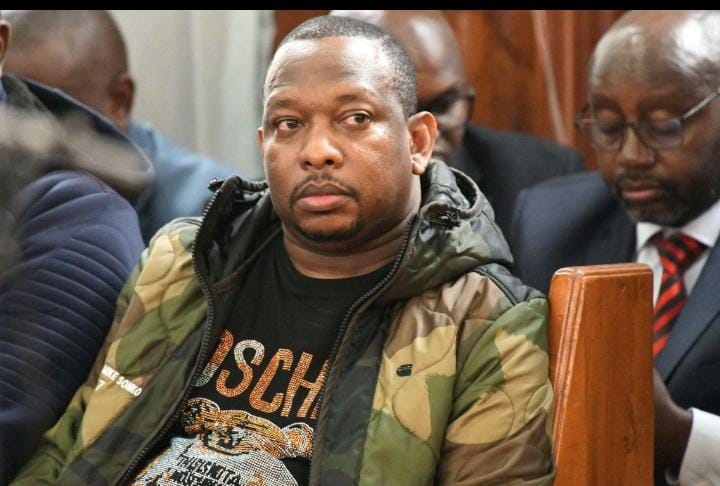
The court victory by former Nairobi Governor Mike Sonko,which saw the release of KSh 537 million previously frozen by the state,offers more than just a personal legal win. It presents a powerful case study on leadership, resilience, and the enduring importance of institutions in a democratic society.
At a time when political tensions often spill into public spats and premature judgments, Sonko’s approach throughout his legal battles provides key lessons for leaders across the spectrum.
Mike Sonko spent years entangled in legal processes that not only tested his political career but also his personal reputation. Rather than resorting to sustained public confrontation with the judiciary, he allowed the legal system to run its full course.
This kind of patience is increasingly rare in today’s fast-paced political environment, where leaders often seek immediate vindication through media campaigns or political pressure. Sonko’s case demonstrates that enduring due process,even when it is slow and uncomfortable,can ultimately yield results.
For current and aspiring leaders, the lesson is clear,
trust the process, even when it doesn’t immediately favor you.
Kenya’s political landscape is often characterized by sharp divisions and retaliatory rhetoric. Yet, despite the weight of the allegations and the freezing of his assets, Sonko largely avoided sustained direct attacks that could undermine state institutions.
Instead of escalating tensions, he maintained a posture that allowed the matter to remain within legal confines.
This reflects a level of political tolerance, where disagreement with state action does not automatically translate into hostility toward institutions.
Leaders can learn that not every battle must be fought politically,some are best resolved legally and institutionally. Restraint can strengthen credibility rather than weaken it for tomorrows benefit.
The Court of Appeal’s decision to uphold the High Court ruling underscores a crucial principle: justice is best pursued through established legal channels, not public opinion or political influence.
His victory is a reminder that the rule of law must remain supreme, even in politically charged cases and that legal victories carry more legitimacy than political ones.
Through institutions in politics, perception is always everything. For years, Sonko’s image was under intense scrutiny. However, this court victory provides a timely opportunity for institution-backed reputation rebuilding.
Unlike charged public relations campaigns, a favorable court ruling carries legal weight and credibility. It allows a leader to reframe their narrative not through words, but through judicial validation.
This is a critical lesson that the strongest defense of one’s reputation is often institutional vindication, not media rebuttal.
Sonko’s case is not just about one individual,it reflects the evolving maturity of Kenya’s democratic and legal systems. It shows that even high-profile and politically sensitive cases can be resolved within the framework of the law.
Leaders should take away four key principles with the first one being patience and taking into mind that legal and institutional processes take time.
Another lesson learnt is that political differences should not erode national cohesion and that institutions must be upheld, not undermined.
The journey and eventual court victory of Mike Sonko offers a rare but important leadership blueprint in Kenya’s often turbulent political environment.